
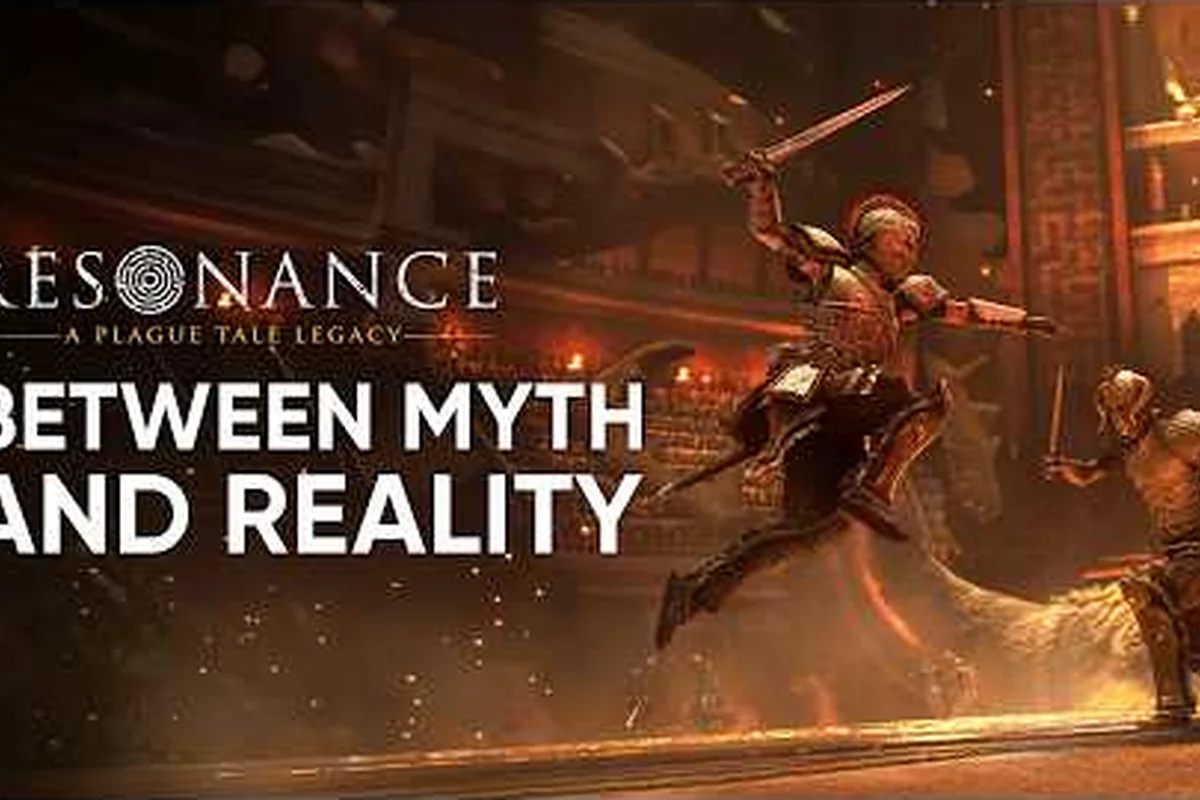
The lore of Resonance: A Plague Tale Legacy pulls the Macula back to a time before rat swarms dominated the narrative. Set in 1334, fifteen years before Requiem, this prequel repositions the ancient blood curse as something far stranger than a plague vector. Understanding the Prima Macula and Minotaur's Island reframes everything players thought they knew about the series' mythology.
The Prima Macula Origin And Why 1334 Matters
The biggest shift in resonance a plague tale legacy lore is the timeline itself. Instead of continuing Amicia and Hugo's story after Requiem, Asobo Studio jumps backward to 1334, a year chosen deliberately because it predates the Black Death's arrival in France by more than a decade. This positioning allows the narrative to explore the Macula as an ancient inheritance rather than a disease tied to medieval rats.
According to developer interviews cited in community discussions, the writing team wanted to answer a question the previous games never addressed: what was the Macula doing before it latched onto Hugo? The answer involves a carrier bloodline stretching back to Minoan Crete, where the curse first manifested in ways that Greek mythology later distorted into the Minotaur legend.
The protagonist Sophia, a smuggler described on the official Resonance: A Plague Tale Legacy website, carries dormant Macula markers that activate only when she reaches Minotaur's Island. This is a crucial distinction from Hugo: Sophia's Macula is not yet fully awakened, which means the horror emerges from external island forces rather than her own blood.
| Timeline Anchor | Year | Macula State | Primary Threat |
|---|---|---|---|
| Innocence | 1348 | Dormant in Hugo | Rat swarms |
| Requiem | 1349 | Fully awakened in Hugo | Rat tsunamis + Macula visions |
| Legacy | 1334 | Dormant in Sophia | Island creature + army |
| Minoan flashback | ~1600 BCE | Original Prima Macula carrier | Unknown (teased) |
This table highlights why the prima macula origin explained thread matters so much: Legacy treats the curse as an archaeological mystery rather than an apocalyptic plague. The dual-timeline structure alternates between Sophia's present-day flight and Minoan Crete flashbacks, which means players experience the origin directly instead of hearing about it through lore notes.
The Macula Legacy Game Explained Through Its Absences
PC Gamer's coverage of the game notes a "suspicious dearth of killer rats," which might sound like a criticism but actually serves a deliberate lore function. The feature on the missing rats describes how horror shifts from swarming rodents to a single unstoppable island creature that players must hide from and outsmart. This change is not just mechanical; it reframes the macula legacy game explained as a story about isolation and ancient secrets rather than population-scale catastrophe.
The resonance a plague tale legacy macula lore operates on a quieter frequency. Light-refraction puzzles built around a stolen Minoan sphere replace the rat-based crowd-control mechanics, forcing Sophia to engage with the curse intellectually rather than defensively. The sphere functions as a Prima Macula key, a device that channels the dormant blood trait to manipulate light and unlock pathways on the island.
The Stolen Sphere And Its Ritual Function
The Minoan sphere is not just a puzzle device; it is the first concrete artifact linking the Macula to a pre-Greek ritual culture. Community analysis of trailer footage suggests the sphere was originally used in a purification rite meant to contain an early Macula carrier who lost control. When Sophia steals it, she inadvertently reactivates the island's ancient containment systems.
This reframing has significant implications for the resonance a plague tale legacy plot summary. Where Innocence and Requiem framed the Macula as a curse to be endured or rejected, Legacy presents it as a designed system with failsafes, rituals, and gatekeepers. The island itself behaves like a mechanism rather than a haunted location, which aligns with the Greek myth connection the developers have emphasized.
Minotaurs Island Lore Explained Through Dual Timelines
The island is the article's most important secondary character. Minotaurs island lore explained through the dual-timeline structure reveals that the Minoan civilization did not simply vanish; it sealed itself to contain the Prima Macula carrier who became the mythological Minotaur. The labyrinth, the bull-headed monster, and the sacrificial tributes are all distorted memories of a containment protocol that failed.
The island's geography supports this reading. Sophia navigates environments that blend natural cave systems with constructed stone corridors, implying that the Minoans carved the labyrinth directly into the island's volcanic rock. The stalking creature, according to PC Gamer's release-date coverage, cannot be killed—only evaded—which positions it as the containment system's enforcer rather than a random monster.
| Island Element | Mythological Counterpart | Lore Function |
|---|---|---|
| Labyrinth corridors | Minotaur's maze | Containment path |
| Stalking creature | The Minotaur itself | Enforcer of the seal |
| Minoan sphere | Ariadne's thread | Key to navigation |
| Light-refraction puzzles | Theseus's cunning | Bloodline attunement test |
| Sophia's arrival | The tribute ship | Reactivation trigger |
This table maps how resonance a plague tale legacy lore converts Greek myth into functional game systems. The tribute ship detail is especially significant because it suggests the island does not passively wait for visitors; it pulls carriers toward it, which explains why an entire army hunting Sophia cannot follow her across the water.
How The Island Pulls Macula Carriers
The island's pull is not magical in the traditional sense but resonant. The Prima Macula operates on frequency-like principles, and Sophia's dormant blood trait vibrates at the same frequency as the island's sealed core. This is why the game is titled Resonance rather than something plague-adjacent: the central mechanic is sympathetic vibration between carrier and containment site.
The full history of this mechanism, including how the dual timeline shifts between medieval France and Minoan Crete, is covered in greater depth in the dual timeline guide. The key takeaway for lore readers is that the island does not just hold secrets; it actively responds to bloodline proximity, which makes Sophia's journey inevitable once she touches the sphere.
What The Minoan Flashbacks Reveal About The Prima Macula
The flashback segments are the most direct prima macula origin explained content in the game. Players control a Minoan-era carrier whose name has not been officially revealed but whom community sources tentatively identify as the historical figure behind the Minotaur myth. These sequences show the Macula before it was called the Macula—a raw, unmediated blood resonance that the Minoans attempted to ritualize.
The flashbacks establish three key lore points. First, the Macula is older than the Black Death by thousands of years, which retroactively recontextualizes the rat swarms in the previous games as a modern symptom of an ancient condition. Second, the Minoans did not create the Macula; they discovered it and built containment infrastructure around it. Third, the Prima Macula is not a single person but a lineage designation—the first family line to carry the trait.
The Lineage Question And Sophia's Place In It
This lineage point is crucial for the resonance a plague tale legacy story explained thread. If the Prima Macula is a lineage rather than a person, then Hugo and Sophia are both branches of the same bloodline, separated by geography and centuries but connected by the same resonant frequency. The game's title, Resonance, therefore refers to the harmonic relationship between carriers across time.
Community discussion of the timeline placement notes that Sophia cannot be Hugo's direct ancestor because she operates only fifteen years before Requiem, but she could be a collateral branch that the main family lost track of. This would explain why Amicia's family in Innocence showed no awareness of Sophia's existence: the bloodline fragmented during the medieval period, and each branch developed its own relationship to the curse.
How The Island Creature Fits Into Macula Lore
The stalking creature that replaces the rats is the most controversial element of the resonance a plague tale legacy lore shift. PC Gamer's coverage frames it as an "island creature that cannot be stopped, only hidden from and outsmarted," which positions it as a guardian rather than a predator. The creature does not hunt Sophia for food; it hunts her because her blood resonance has triggered the island's intrusion response.
This distinction matters because it aligns the creature with the Macula itself. In previous games, the Macula's manifestations were external to the carrier—rats that obeyed Hugo's emotions. In Legacy, the creature appears to be internal to the island, a physical expression of the containment system's defense mechanism. The horror comes from being trapped inside a system that cannot distinguish between a threat and an heir.
The Chase Sequences As Lore Delivery
The creature's chase sequences are not just mechanical tension; they are lore delivery systems. Each encounter reveals more about how the island's defenses work, what triggers them, and why the Minoans designed such an unforgiving failsafe. The chase sequence tips guide covers the practical survival mechanics, but the lore implication is that Sophia must learn to move like a Minoan ritualist—deliberately, quietly, and with full awareness of sightlines.
This emphasis on stealth as ritual is a major departure from the previous games' combat-oriented survival. The island does not want Sophia dead; it wants her proven worthy, which is why the creature kills intruders but allows carriers to progress if they demonstrate the right behaviors.
The Army, The Smugglers, And The Political Layer
While the island dominates the supernatural narrative, the resonance a plague tale legacy plot summary also includes a human antagonist layer. An entire army hunts Sophia because she has stolen the Minoan sphere, which the army's commander believes is a weapon rather than a ritual artifact. This misunderstanding drives the external conflict and forces Sophia toward the island not by choice but by elimination of alternatives.
The smuggler crew that raised Sophia provides the game's emotional anchor. These characters know nothing about the Macula; they see Sophia as a skilled thief with a target on her back. The tension between the crew's pragmatic worldview and the island's mythological reality creates the narrative friction that makes the lore reveals land with impact.
| Faction | Knowledge Level | Motivation | Relationship To Macula |
|---|---|---|---|
| Sophia's crew | None | Survival + profit | Unknowing protectors |
| The army | Misinterpreted | Recover the sphere | Fearful aggressors |
| Minoan remnant | Full understanding | Maintain the seal | Hereditary guardians |
| The island creature | Non-sentient | Enforce containment | Physical failsafe |
This faction table clarifies the resonance a plague tale legacy macula lore structure: knowledge of the curse is concentrated in the Minoan remnant, a group that has survived in isolation on or near the island for centuries. Their role as hereditary guardians introduces the possibility that the Macula has been actively managed—not just endured—throughout history.
The Dual Timeline As A Structural Innovation
The dual-timeline structure is Legacy's boldest narrative experiment. Unlike flashback sequences in most games, the Minoan segments are fully playable chapters with their own mechanics, environments, and stakes. This structural choice means the resonance a plague tale legacy lore is not told through exposition but through parallel experience, with Sophia's present-day actions echoing the Minoan carrier's ancient rituals.
The Wikipedia article on the game notes that the development team built Legacy with roughly 70 people on the in-house Zouna engine, which is a small enough team that the dual-timeline scope represents a significant creative risk. The decision to alternate between medieval France and Minoan Crete suggests confidence in the lore's ability to carry player investment without relying on familiar plague imagery.
How The Timelines Echo Each Other
The echo structure is the key to understanding the macula legacy game explained at a thematic level. Sophia's theft of the sphere mirrors the Minoan carrier's original sin; her flight toward the island mirrors the carrier's descent into the labyrinth; her encounter with the creature mirrors the carrier's transformation into the Minotaur myth. The game is not telling two separate stories but one story stretched across time.
This echo structure also explains why the rats are absent. The rat swarms in Innocence and Requiem were the Macula's modern expression, a symptom of a fully awakened carrier in a densely populated environment. Sophia's Macula is dormant, and the island's containment systems are active, so the plague cannot manifest. The absence of rats is not a creative retreat but a lore-consistent design choice.
Frequently Asked Questions
What is the Prima Macula in Resonance: A Plague Tale Legacy?
The Prima Macula is the original bloodline that first carried the curse, dating back to Minoan Crete around 1600 BCE. Legacy reveals that the Macula is a lineage designation rather than a single person, which means Sophia and Hugo are distant branches of the same ancient bloodline.
Why are there no rats in Resonance: A Plague Tale Legacy?
The rats were a symptom of a fully awakened Macula carrier in a populated area. Sophia's Macula is dormant, and the island's containment systems suppress the plague expression. The horror shifts to a stalking creature that enforces the island's ancient seal.
How does Minotaur's Island connect to Greek mythology?
Minotaur's Island is the historical seed of the Minotaur legend. The labyrinth, bull-headed monster, and ritual tributes are distorted folk memories of a failed Minoan containment protocol — the Minoans sealed themselves off to confine a Prima Macula carrier who lost control, and Greek myth later reshaped that event.
Is Sophia related to Amicia and Hugo?
Community analysis suggests Sophia belongs to a collateral branch of the same Macula bloodline, separated from Amicia's family during the medieval period. She operates only fifteen years before Requiem, so she cannot be a direct ancestor but likely shares the ancient lineage.
What is the Minoan sphere and why is it important?
The Minoan sphere is a ritual artifact that channels dormant Macula energy to manipulate light and unlock pathways. It functions as a Prima Macula key, and stealing it reactivates the island's containment systems while drawing the army's attention to Sophia.