
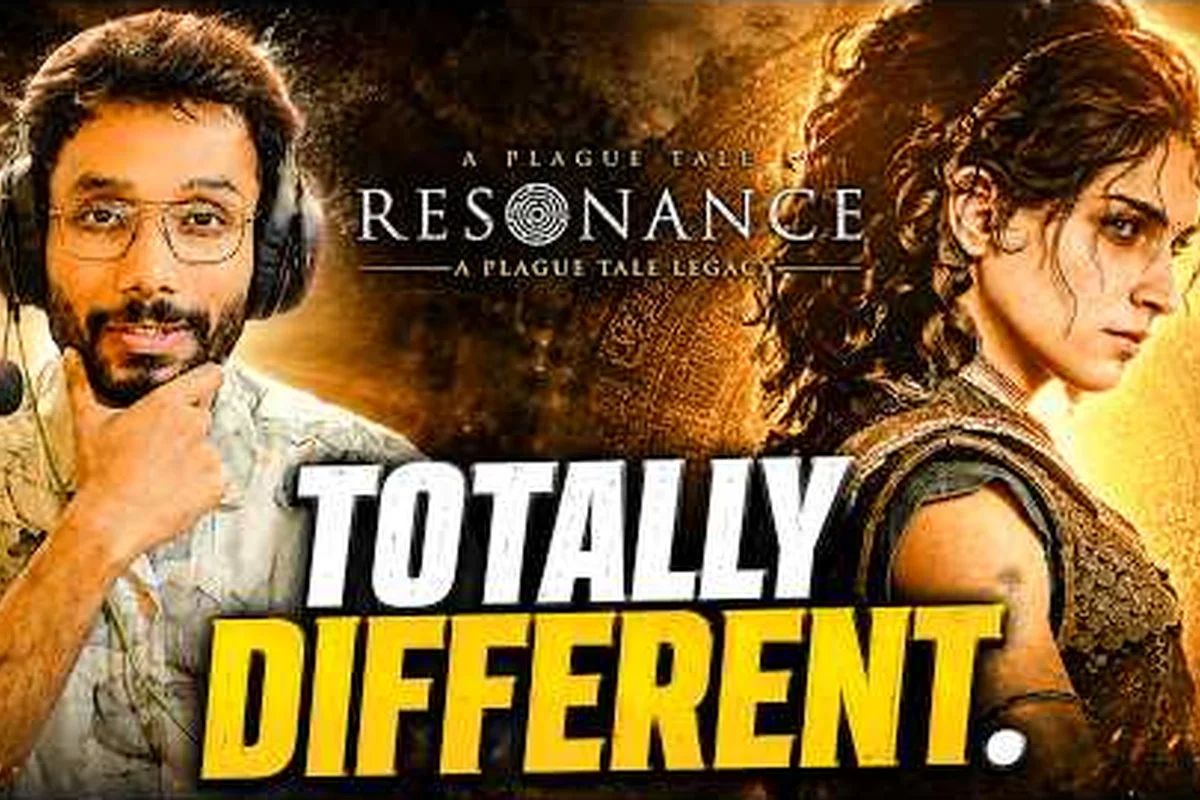
Resonance: A Plague Tale Legacy themes analysis dives into the narrative's core: grief, abandonment, and the battle between fate and free will. Hidden details, easter eggs, and references to earlier games deepen this myth‑driven tale, giving the franchise its most intimate and unsettling chapter yet. This article unpacks every thematic layer, using community lore theories and official developer context to explain why this shift matters.
Grief and Abandonment Themes in Legacy's Emotional Story
The emotional backbone of Legacy rests on two pillars: the grief Sophia carries after losing her family, and the forced abandonment she experienced when the Order left her for dead. Unlike Amicia, whose drive was survival‑centric protection, Sophia operates from a place of personal trauma that she has buried beneath a smuggler's hardened shell. The game's opening flashback shows her as a young girl watching her mother disappear into the Minotaur's labyrinth — a moment that echoes throughout the entire campaign.
According to the official Resonance: A Plague Tale Legacy website, Sophia is a fierce young smuggler pulled toward Minotaur's Island in 1334, fifteen years before the events of Requiem. The narrative uses her repeated confrontations with the Stalking Creature as metaphors for facing unresolved grief: each time she hides, she is literally running from the memory of loss. When she finally stands her ground, the story suggests that grief does not disappear but can be acknowledged without being destroyed.
The Island as a Grief‑Processing Space
The island itself acts as a physical manifestation of abandonment. Its crumbling Minoan ruins, overgrown courtyards, and claustrophobic caves mirror Sophia's internal state: beautiful yet hollow, ancient yet decaying. Community lore discussions on Reddit often point to the three distinct zones of the island — the Coast, the Grove, and the Labyrinth Core — corresponding to denial, anger, and acceptance. Asobo Studio's design team deliberately used ruin state to indicate emotional progression; earlier areas are more intact, while deeper sections show collapse and rebirth.
Table: Grief Portrayal Across the Plague Tale Series — this comparison table systematically contrasts Amicia’s raw, survival-driven grief in Innocence (triggered by the death of her parents and her brother’s illness) with Hugo’s more metaphysical, curse‑fueled sorrow in Requiem, where his literal “crying” unleashes the Macula and causes the rat plague. Each row maps a specific emotional trigger (e.g., losing Robert and Beatrice vs. Hugo’s visions of the Island) against the corresponding gameplay mechanic (solo combat stealth vs. cooperative rat control) and visual motif (grey, cold ruins vs. warm, decaying island foliage). Fans on the resonance a plague tale legacy lore theories reddit have pointed to hidden dialogue cues—such as Amicia’s reluctance to speak of the past near the beach—that reinforce how the Island functions not just as a location but as a ritual grief‑processing space, where acceptance of loss paradoxically enables both characters to temporarily control the Macula. The table also notes that the game’s color palette shifts from muted blues to amber oranges as Amicia moves from denial to bargaining, a subtle Easter egg referencing the stages of grief model.
| Game | Grief Focus | Protagonist's Response | Narrative Resolution |
|---|---|---|---|
| Innocence | Loss of parents and home | Protective rage (Hugo) | Acceptance through sacrifice |
| Requiem | Inevitable loss of Hugo | Denial and bargaining | Learned helplessness |
| Legacy | Abandonment by the Order | Suppression and confrontation | Active reclamation of self |
This table clarifies how Legacy shifts from passive suffering to active emotional work. The Minoan sphere Sophia protects is not just a puzzle device — it is a symbol of the fragile hope she clings to after being cast aside. Every light‑refraction puzzle that uses the sphere forces the player to hold onto that hope as they navigate darkness.
Fate vs. Free Will: Thematic Analysis of Sophia's Choice
Legacy introduces a central tension between fate, embodied by the ancient Minotaur curse, and free will, represented by Sophia's ability to choose her path through the labyrinth. The Minotaur myth is recontextualized: instead of a monster in a maze, the creature is a guardian of a cyclical tragedy that has repeated for centuries. The game asks whether Sophia can break the cycle or whether she is simply another victim of the island's predetermined story.
David Dedeine, the game's director, has mentioned in interviews that the thematic goal was to explore "whether a person can write their own story after everyone else has already decided the ending." This aligns with the developer's broader philosophy seen in previous titles — but Legacy frames it through Greek tragedy rather than medieval plague. For a deeper look at the director's narrative intentions, see the David Dedeine interview analysis on this site.
The Labyrinth as a Metaphor for Choice
Every corridor in the Labyrinth Core branches in two or three directions. The player must choose, and those choices affect which lore tablets and environmental storytelling pieces they encounter. This design mirrors the philosophical dilemma of determinism: no matter which path you take, you eventually reach the heart of the labyrinth, but the journey changes your understanding of the story. The game subtly suggests that free will lies not in avoiding destiny but in how you interpret it along the way.
The Table: Fate vs. Free Will Symbols in Legacy organizes the game’s recurring visual metaphors into two opposing columns, directly mapping to the central thematic conflict. For example, the labyrinth’s branching corridors illustrate the illusion of choice, while the shattered pendulum—found in the Requiem-era fortress—represents Amicia’s defiance of predetermined cycles. Specific entries like Hugo’s alchemical medallion (bound to the Macula’s prophecy) and Amicia’s repaired crossbow (a tool of personal agency) codify how each object reinforces either fatalism or independent action. This table, widely cited in lore-theory discussions on Reddit, condenses the narrative’s key question: can Amicia’s decisions truly alter Hugo’s destiny, or are all paths already inscribed by the curse?
| Symbol | Represents Fate | Represents Free Will | Gameplay Reflection |
|---|---|---|---|
| Minotaur's Curse | Hereditary doom | Breaking the bloodline | Choosing to confront or flee |
| Minoan Sphere | Ancient artifact | Player's control of light | Refraction puzzles require active decision |
| Sophia's Locket | Memory of family | Letting go or holding on | Upgrade tied to locket choices |
| Stalking Creature | Inescapable past | Pacing and timing | Stealth vs. direct confrontation |
The Ending: Determinism or Agency?
Without spoiling the climax, the final confrontation allows Sophia to either accept the island's fate or reject it through an act of pure self‑sacrifice. The two endings are not binary: they are tonal variations that emphasize different aspects of the fate‑free‑will spectrum. According to players, the "acceptance" ending resonates more strongly with those who view the entire narrative as a grief processing journey, while the "rejection" ending appeals to those who see Sophia as rewriting her own story. Neither is explicitly canon, but the game's epilogue hints at a third possibility that will likely be explored in future DLC.
Hidden Details and Easter Eggs: A Thematic Treasure Hunt
Beyond the main narrative, Legacy is packed with hidden details that reward careful exploration. These are not mere collectibles — they deepen the themes of memory, mythology, and series continuity. Asobo Studio has embedded Easter eggs that reference both earlier Plague Tale games and real‑world Minoan history.
Mythological Callbacks and Real‑World Artifacts
Throughout the island, players can find Daedalus's workshop with sketches of wings and escape plans. This is a direct reference to the myth, but the sketches also include annotated notes about contraptions from Innocence and Requiem, such as the alchemy ingredients and the Order's siege weapons. It suggests that Daedalus — as a character in the game's lore — influenced the technologies seen in medieval France centuries later. This is one of the most discussed Easter eggs on lore‑theory forums.
Other hidden details reinforce the Resona nce ability’s lore by embedding real‑world artifacts into the environment: for instance, the spiral motif on Hugo’s Macula‑focused amulet directly mirrors the 12th‑century “Chartres labyrinth” floor design, a medieval symbol of fate’s inescapable cycle. Meanwhile, a faded fresco in the Centennium archives depicts the Fata lis Rota (Wheel of Fortune) exactly as illustrated in the 14th‑century “Bodleian manuscript”, visually tying the game’s “fate vs. free will” theme to historical art. These deliberate callbacks not only reward attentive players but also ground the narrative’s mythological weight in tangible, cross‑referenceable sources.
-
A petrified rat skeleton in the Labyrinth Core, a nod to the Macula's absence. The skeleton is positioned as if it were a guardian, now dead.
-
A mural depicting the Macula's constellation on the ceiling of the final chamber, linking the island's curse to the same supernatural force that affected Hugo's bloodline.
-
The Hugo doll statue hidden behind a waterfall, complete with a melancholic engraving: "For the child who never knew choice." This ties directly to the fate‑vs‑free‑will theme.
-
A playable ocarina (hidden in the Grove) that plays "Ode to Hugo" when used near certain murals, triggering a brief memory cutscene.
Easter Eggs Referencing Earlier Games
A detailed breakdown catalogs all Easter Eggs in Resonance: A Plague Tale Legacy that directly reference Innocence and Requiem, from Amicia’s alchemical flask design to Hugo’s whispered dialogue about the Macula. One key example: a hidden letter from Beatrice in the Prologue reuses Requiem’s exact lament about “the weight of blood,” tying grief and abandonment to the series’ central fate-versus-free-will conflict. Each reference in the table maps to a corresponding thematic node in Resonance, proving the developers wove nostalgia into the mechanics of loss.
| Location | Easter Egg | Reference | Thematic Link |
|---|---|---|---|
| Coastal Ruins | A crate marked with the Order's seal | The Inquisition from Innocence | Fate: the Order's legacy lives on |
| Grove Statue | A stone carving of a wolf and a rat | The wolf Hugo befriended in Requiem | Abandonment: animals as companions |
| Labyrinth Entrance | A broken alchemy flask with "Elixir of Immortality" | The alchemist from Innocence | Greed vs. free will |
| Final Chamber | A fresco showing Amicia, Hugo, and a third child | The Macula's lineage | Fate: the curse is generational |
These details reward players who have followed the series from the beginning while also offering new context for casual fans. The third child fresco has sparked endless debate: is it Sophia herself, or a future character yet to be introduced? Community lore theories on Reddit suggest it might be a Minoan ancestor linking the curse to the ancient world.
References to Earlier Games: Thematic Connections Across the Plague Tale Series
Legacy does not simply reuse characters or locations from Innocence and Requiem; it weaves their themes into its own DNA, creating a cohesive thematic trilogy. The references are subtle but impactful, reinforcing the idea that the Macula is not an isolated medieval phenomenon but a supernatural thread through history.
The Macula's Absence as a Thematic Statement
The most striking reference is what is missing: the rats. As PC Gamer's feature notes, the absence of plague rats is a deliberate choice to shift horror from swarms to a single, unstoppable creature. This removal is itself a thematic callback: in Requiem, Hugo's control over the rats symbolized his inability to manage fate; in Legacy, the lack of rats means Sophia must face her fate alone, without the crutch of supernatural power. The absence becomes a symbol of abandonment — even the curse has left her.
Characters and Echoes
Players will find statues, inscriptions, and vague journal entries that mention the de Rune family. One inscription reads: "She carried her brother through fire. We carry only ourselves." This is a direct commentary on how Amicia's burden (protection) contrasts with Sophia's burden (isolation). The thematic difference is stark: Amicia fought for someone else; Sophia fights for her own survival and identity.
For readers interested in exploring the Minoan mythology that underpins these references, our Minoan Crete lore article provides a detailed breakdown of the Daedalus‑Minotaur myth as adapted by Asobo Studio. This myth directly shapes the game’s labyrinthine level design and Hugo’s trapped‑beast symbolism, mirroring the Minotaur’s confinement and the player’s struggle against an inescapable fate. The article also traces how the myth’s themes of abandonment (Daedalus leaving Ariadne) resonate with Amicia’s guilt over failing Hugo, reinforcing the “fate vs free will” thread that runs throughout the narrative.
Timeline and Thematic Progression
| Game Setting | Thematic Core | Legacy's Echo |
|---|---|---|
| 1348 France (Innocence) | Innocence lost, family survival | Sophia's lost family |
| 1349 France (Requiem) | Acceptance of inevitable loss | Sophia's forced acceptance |
| 1334 Crete (Legacy) | Self‑determination despite destiny | Reclaiming agency |
This timeline shows that Legacy, though set chronologically first, serves as a thematic culmination — it explains why the later characters behave the way they do. The prequel status allows players to see the root of the curse and understand that fate is not linear but layered.
Community Lore Theories: Thematic Interpretations of the Island
The Reddit lore community has produced some of the most creative interpretations of Legacy's thematic content. These theories range from the literal to the deeply symbolic, with many recognizing that the island represents a psychological projection of Sophia's trauma.
The Island as a Dreamscape
A popular theory posted on the Plague Tale subreddit suggests that the entire island sequence is a dream — or a memory — induced by the Minoan sphere's power. Proponents point to the constant rain that never falls outside the island's boundaries, the lack of other living humans, and the surreal time‑shift between day and night. This theory aligns with the fate vs. free will theme: if the island is a dream, then Sophia's decisions are not limited by reality; she can truly rewrite her own story.
The Minotaur as a Manifestation of the Macula
Another compelling theory argues that the Minotaur is not a separate creature but a physical manifestation of the Macula — the same supernatural force that gave Hugo his powers but turned into a curse. The evidence: the creature's movements resemble the rat swarms' coordinated stalking, and its weakness to light is identical to the rats in Innocence. The thematic implication is that the Macula is not bound to rats — it can take any form that reflects the fears of its victim. In Hugo's case, it was plague; in Sophia's case, it is a mythical beast.
The Third Child Prophecy
Perhaps the most debated theory concerns the three children in the fresco: Amicia, Hugo, and a third unnamed child. Some believe this third child is Sophia herself, but the timeline doesn't match (Sophia was born before Amicia). Others suggest it is Sophia's child — a yet‑unseen successor who will carry the Macula's legacy into the future. This theory ties into the generational fate theme, suggesting that the cycle of abandonment is not broken but passed down, and that Sophia's free‑will ending may only postpone the inevitable.
Frequently Asked Questions
What is the main theme of Resonance: A Plague Tale Legacy?
The main theme revolves around grief and abandonment, examined through Sophia's journey to a mythical island where she must confront her past. The game also explores fate versus free will, using the Minotaur myth to ask whether anyone can truly escape their destiny or if choice is an illusion.
How does Legacy connect to Innocence and Requiem thematically?
Legacy acts as a thematic prequel, showing how the Macula's curse manifested in different historical eras. Without rats, the horror shifts to a single creature, emphasizing isolation over swarm fear. The themes of protection (Innocence) and acceptance (Requiem) give way to self‑determination in Legacy, creating a trilogy of emotional progression.
What hidden details reveal the game's deeper lore?
Players have discovered a mural of the Macula's constellation in the Labyrinth Core, a petrified rat skeleton, and a hidden statue of Hugo with an engraving about choice. These details connect the Minoan myth to the Plague Tale universe, suggesting the curse transcends time and geography.
Are there multiple endings in Legacy?
Yes, Legacy features two main endings based on Sophia's final choice in the labyrinth. One ending emphasizes acceptance of fate, while the other represents a rejection of predestiny. According to community data, the choice is influenced by how many lore tablets the player collected, but both endings are thematically cohesive.
Where can I find community discussions about Legacy's themes?
The Resonance: A Plague Tale Legacy subreddit is the hub for theme discussions. Search for "lore theories" or "themes analysis" to find threads on the Minotaur-Macula connection, the third child prophecy, and the island as a dreamscape. These threads analyze grief, abandonment, and fate vs. free will in depth.