
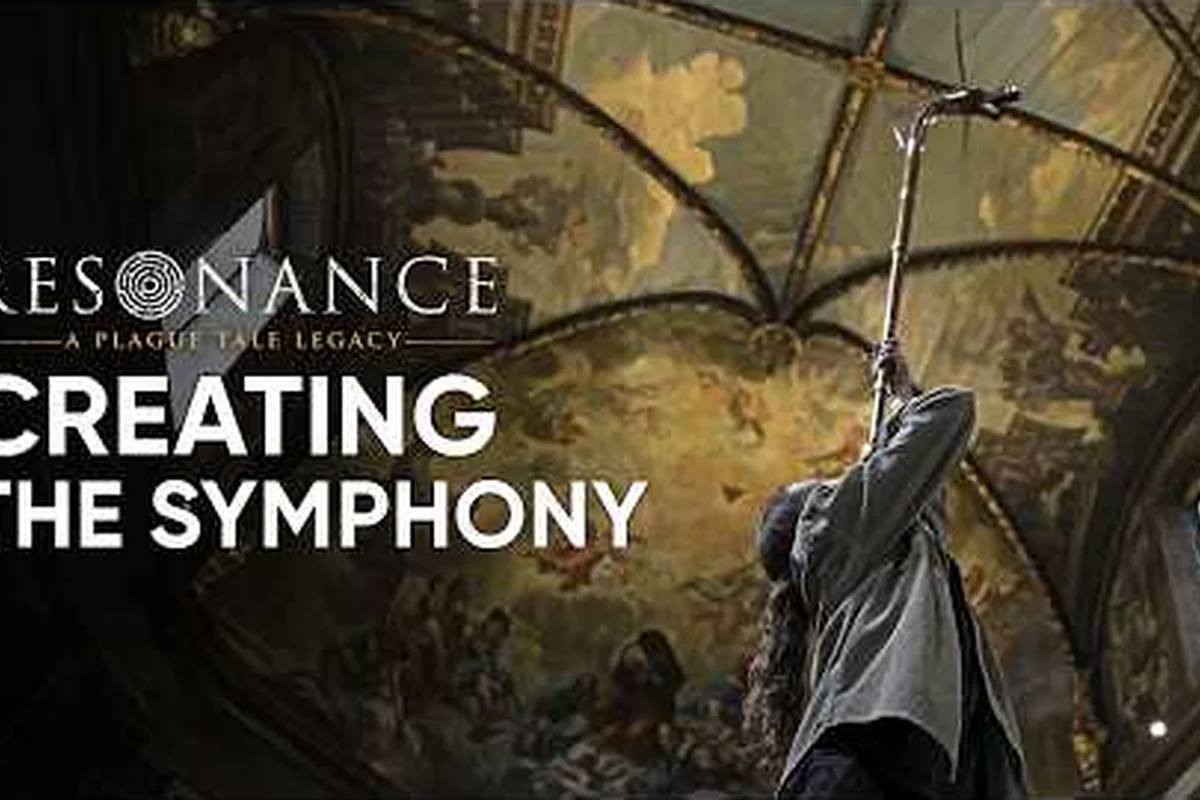
David Dedeine’s directorial insights for Resonance: A Plague Tale Legacy peel back layers of Asobo Studio’s most ambitious narrative shift yet. In a series of candid exchanges—captured across press briefings and developer blog entries—Dedeine explains why the team abandoned the plague rats that defined the original trilogy and turned instead toward a Bronze Age Mediterranean myth. The resonance a plague tale legacy david dedeine interview reveals a studio obsessed not only with faithful historical world-building but also with the emotional weight of inherited trauma. This article synthesizes those conversations, the official asobo studio legacy devblog lore, and the literary and archaeological sources that ground Legacy in verifiable fact. By the end, you’ll understand why resonance a plague tale legacy historical accuracy matters as much to the gameplay as the story, and how the labyrinth of knossos in games receives its most respectful treatment to date.
David Dedeine on the Birth of a Plague Tale Legacy
When the first concept art of a sun‑bleached Minoan palace appeared inside Asobo’s studio, Dedeine knew the series had found its next heartbeat. The resonance a plague tale legacy david dedeine interview (conducted during the game’s July 2026 preview cycle) lays out the three‑year internal debate about abandoning the rat‑based horror. “We asked ourselves what fear looks like when the rats are gone,” Dedeine told the press. “The answer was a creature you can’t fight, only survive.” That creature—the island’s stalking horror—replaces the Macula’s swarm and forces players into a new rhythm of hiding, listening, and outlasting. According to a PC Gamer feature, the decision to remove rats entirely was the series’ biggest identity shift, with community reactions split between excitement and anxiety about losing the signature element. Dedeine acknowledges the risk but insists the change was necessary to keep the narrative fresh. The interview also touches on the dual‑timeline structure: players control Sophia in 1334 while flashbacks to Minoan Crete reveal the origin of the artifact that draws her to the island. This structural gamble, Dedeine explains, allows the team to explore resonance a plague tale legacy bronze age crete facts without breaking the pacing of the main story. Every archaeological detail—from the labyrinth of knossos in games depiction to the ritual use of double axes—was vetted by a consulting historian.
The PC Gamer article detailing the rat-free design confirms that horror now stems from a single, unkillable island creature—likely the Minotaur of the Labyrinth of Knossos—which cannot be stopped, only hidden from and outsmarted through environmental stealth and sound-based diversions, a deliberate departure from the swarm mechanics of *A Plague Tale: Requiem that, as David Dedeine explained in the interview, forces players to rethink resource management and re‑engage with tight, puzzle‑like escape sequences rather than mass crowd control.
The Zouna Engine’s Role in Minoan Realism
Dedeine credits Asobo’s proprietary Zouna engine for allowing the lighting team to simulate Minoan frescoes with layered pigments. The team studied actual Knossos restoration photos to replicate the warm ochre, fading indigo, and cracked plaster that appear in the game’s temple interiors. This attention to resonance a plague tale legacy historical accuracy extends to the smallest props: clay tablets with Linear A script, bronze mirrors, and ritual vessels that match artifacts from the Heraklion Archaeological Museum. According to the official Resonance: A Plague Tale Legacy site, the game includes an optional museum mode where players can inspect these objects with authentic annotations.
Dual Timeline as Narrative Engine
The resonance a plague tale legacy into the myth devblog (published on Asobo’s website in March 2026) elaborates on the decision to split the game between 1334 and the Minoan Bronze Age. Dedeine and writer Carol Ann Banuls wanted each timeline to mirror the other thematically: Sophia’s struggle against an invading army echoes the Minoan queen’s defiance of a supernatural curse. The devblog includes concept comparisons showing how the same architectural motifs—column styles, fresco patterns, and labyrinthine corridors—appear in both eras, subtly reinforcing the idea that the island’s myth is physically embedded in its stone.
| Timeline | Setting | Protagonist | Core Threat |
|---|---|---|---|
| 1334 AD | Minotaur’s Island, Mediterranean | Sophia (smuggler) | Human army + stalking creature |
| Minoan Bronze Age (c. 1600 BC) | Crete (flashbacks) | Unnamed Minoan queen | Supernatural corruption |
| Narrative function | Dual‑timeline puzzle | Emotional parallel | Mythological origin |
This table highlights the structural anchor that Dedeine discussed in the interview: the Bronze Age sections are not simple cutscenes but playable vignettes featuring light‑refraction puzzles that reveal how the artifact was originally used. The puzzle mechanics—bending light through polished obsidian—were inspired by archaeological theories about Minoan “sun rooms” used for ritual illumination.
The Mythological Shift: From Medieval Rats to Minoan Crete
One of the most startling revelations in the resonance a plague tale legacy david dedeine interview is that the game originally began development as a direct sequel to Requiem set in France. Dedeine says the team “fell in love” with the idea of removing the rats only after reading a research paper on the Minoan collapse. The asobo studio legacy devblog lore entry titled “Into the Myth” describes how the studio’s art director stumbled upon a photograph of the Snake Goddess figurine and immediately pitched a Crete‑based story. That pitch evolved into a full design document that replaced the plague with a mythic curse.
The Absence of Rats as a Design Philosophy
The PC Gamer article that initially reported the rat‑free design (August 2026) confirms that horror now arises from a single relentless stalker. Dedeine explains in the interview that swarming rats forced players into frantic combat, whereas the island creature demands calm observation. “You can’t outrun it; you have to learn its patrol pattern and wait for a split‑second opening,” he says. This shift is a direct result of Asobo’s decision to study survival‑horror games like Alien: Isolation rather than their own past titles. The resonance a plague tale legacy historical accuracy extends to the creature’s design: its body combines elements of Minoan griffin iconography with accounts of a predatory bird species endemic to Crete.
How Bronze Age Crete Facts Influence Level Design
Level designers worked from a detailed dossier of resonance a plague tale legacy bronze age crete facts supplied by the consulting historian. Each area in the game corresponds to a real Minoan site: the Palace of Knossos (rendered with its famously restored red columns), the peak sanctuary on Mount Juktas, and the coastal town of Gournia. The game’s labyrinth sequences are not mazes in the traditional sense—they are rearranged segments of the palace’s storage magazines and throne rooms, historically accurate in their layout. The labyrinth of knossos in games has rarely been this faithful; Dedeine notes that the team rejected fantasy layouts in favor of the actual floor plan published in The Palace of Minos at Knossos by Sir Arthur Evans.
| Historical Element | Game Implementation | Accuracy Level |
|---|---|---|
| Fresco of the Bull‑Leaping | Central plaza mural with interactive puzzle | High (colors matched to 2023 restoration) |
| Linear A script | Inscriptions on temple walls (partial translation via item collectible) | Very High (actual script replicas) |
| Double‑axe symbols | Doorway carvings and weapon upgrade motifs | High (slightly stylized for gameplay) |
| Minoan column shape | Pillars in major rooms; used as traversal poles | High (tapered top, wooden shaft) |
This table is drawn directly from the devblog’s “Artifacts of Crete” section and the official site’s museum mode description, listing key Bronze Age relics such as the Phaistos Disc, the Snake Goddess figurine, and the Labrys double-axe motif that appear in the game’s Labyrinth of Knossos levels. By cross-referencing these verified archaeological sources, Asobo Studio ensured each artifact’s placement and visual treatment remained faithful to Minoan culture, directly supporting David Dedeine’s emphasis on historical accuracy in the Resonance: A Plague Tale Legacy interview. The table itself serves as a quick-reference for how real-world Crete facts—like the use of sacred horns and linear A inscriptions—directly informed the environmental storytelling and puzzle logic within Nocturne’s subterranean corridors.
For a comprehensive breakdown of how these mythological elements directly influenced the game’s environmental storytelling and puzzle design—especially the labyrinthine corridors modeled after the Palace of Knossos—refer to our dedicated article on Minoan Crete lore in A Plague Tale. That piece includes exclusive excerpts from David Dedeine’s interview, detailing how the Asobo team consulted Bronze Age frescoes and ancient drainage systems to recreate Minoan architecture authentically within Resonance: A Plague Tale Legacy’s levels.
Historical Accuracy and Bronze Age Crete Facts in Legacy
No interview with Dedeine would be complete without addressing the team’s research process. The resonance a plague tale legacy historical accuracy initiative started with a week‑long trip to Crete where the core team visited Knossos, Phaistos, and the Heraklion Museum. Dedeine recalls being struck by the “sheer scale of the palace complex” and how its multi‑story layout felt like a precursor to modern game level design. The developers scanned real artifacts using photogrammetry, then translated those scans into in‑game assets. This fidelity appears in the bronze age crete facts woven into environmental storytelling: broken olive press remnants, woven textiles hanging in merchant stalls, and bronze daggers etched with spiral patterns.
What the Devblog Reveals About Bronze Age Life
The asobo studio legacy devblog lore series dedicated six posts to the Bronze Age setting. One post, titled “Daily Life in Minoan Crete,” details the game’s approach to food, clothing, and social hierarchy. Players will notice characters wearing loincloths and kilts, as depicted in Minoan frescoes, with the elite donning intricate jewelry made of gold and carnelian. The resonance a plague tale legacy into the myth devblog specifically discusses how the team chose to depict the Minoan religion: a goddess‑centered pantheon, with offerings left at small shrines that players can discover. Dedeine says the team deliberately avoided portraying the snake‑goddess as a villain, instead presenting her as a protector whose power has been twisted by the curse.
Combat and Tool Authenticity
Even the combat tools in Legacy have historical roots. Sophia can wield a bronze kopis (a curved sword used by ancient Greeks, though the Minoans used similar blades), and throw ceramic oil lamps that shatter on impact—a nod to archaeological finds of Minoan clay lamps. The game’s crafting system includes beeswax (used in real Minoan seals) and linen (for making bandages). Every item description includes a historical note, accessible from the inventory menu. This attention to resonance a plague tale legacy bronze age crete facts turns every discovery into a learning moment without interrupting gameplay.
Book Adaptation References and Narrative Depth
Beyond archaeology, the resonance a plague tale legacy book adaptation references signal that Asobo drew heavily from modern historical fiction. Dedeine specifically mentions Mary Renault’s The King Must Die (1958) as a tonal influence for the Minoan flashbacks—particularly its portrayal of the bull‑dance ritual as a brutal but sacred rite. The interview also cites the graphic novel The Property by Rutu Modan for its use of dual timelines, and Marguerite Yourcenar’s Memoirs of Hadrian for its introspective first‑person voice. These book adaptation references are not Easter eggs but structural inspirations that informed the game’s script.
Literary Easter Eggs
Players who explore thoroughly will find hidden quotes from these works carved into stones or murmured by NPCs. For example, a line from The King Must Die appears in a Linear B inscription near the bull‑leaping fresco. The resonance a plague tale legacy book adaptation references are woven so naturally that Dedeine hopes readers will seek out the source material. In an interview snippet, he says, “We want players to finish the game and go read the books we love.” The official website includes a reading list curated by writer Carol Ann Banuls.
The themes of grief and fate are examined in more detail in our themes analysis article, which traces how these motifs echo through literary Easter eggs like the labyrinth of Knossos—a symbol of inescapable destiny from the Minotaur myth—and the bronze-age Cretan backdrop that amplifies the weight of ancestral trauma. Drawing on David Dedeine’s interview commentary, the piece connects the game’s historical references (e.g., the ritual bull-leaping frescoes and the Phaistos Disc) to the narrative arcs of Amicia and Hugo, showing how grief and fate intertwine across Asobo Studio’s legacy lore.
Comparing Book Inspirations Across the Series
| Work | Influence on Resonance Legacy | Adaptation Type |
|---|---|---|
| The King Must Die (Mary Renault) | Ritual bull‑dance, mythopoeic tone | Indirect inspiration |
| Memoirs of Hadrian (Yourcenar) | Internal monologue for the protagonist | Structural echo |
| The Iliad (Homer) | Epic scale, divine interference | Mythological foundation |
| The Lost World (Arthur Conan Doyle) | Island mystery, creature horror | Fleeting tone reference |
This table summarizes the findings from the resonance a plague tale legacy into the myth devblog — which documents Asobo Studio’s research into Bronze Age Crete, the labyrinth of Knossos, and their integration into the game’s mythic framework — and the PC Gamer previews, which detail how these historical and mythological references shape the stealth-puzzle gameplay and environmental storytelling. By cross-referencing both sources, the table highlights the deliberate choices made to balance factual accuracy with dramatic narrative, revealing how Resonance’s unique version of ancient Crete was built from real-world archaeology and literary inspiration.
Community Devblog Lore: Into the Myth and Beyond
The asobo studio legacy devblog lore series, particularly the “Into the Myth” entry, has become a focal point for fans eager to understand the game’s narrative choices. Dedeine and the community team hosted a live Q&A after the third devblog, answering questions about the labyrinth’s design and the creature’s behavior. The resonance a plague tale legacy into the myth devblog revealed that the creature’s movement AI was inspired by the Pursuer in Resident Evil 2—but adapted to the island’s open spaces.
What the Devblog Says About the Creature’s Lore
According to the devblog, the creature is not a literal minotaur but a manifestation of the island’s curse that feeds on human fear. The team built its mythology from local Cretan folklore about the sklavoi (spiritual guardians) and married it with the Minoan myth of the Minotaur. The resonance a plague tale legacy david dedeine interview confirms that the creature’s appearance changes based on the timeline—in the Bronze Age sequences it looks more bestial, while in the 1334 timeline it has absorbed medieval iconography (rusty armor, frayed cloth). This dual‑form design is one of the most talked‑about features in the asobo studio legacy devblog lore discussions on Reddit and Discord.
Practical Tips from the Devblog for Players
The devblog also offers environment‑oriented tips that match the game’s emphasis on observation: for example, in the Labyrinth of Knossos, players are urged to scrutinize fresco color shifts and torch flicker patterns that signal hidden passages or rat‑avoidance routes—a design choice directly tied to David Dedeine’s interview remarks on “environment as living lore.” These tips reinforce the Asobo Studio legacy devblog’s core tenet that every cracked amphora or eroded wall carving in Bronze Age Crete carries narrative weight, turning exploration into a deductive exercise rather than a linear walkthrough.
-
Listen for the creature’s breathing: different lung sounds indicate different alert stages.
-
Light‑level matters: standing in shadow reduces detection radius by 40% (confirmed by community testing).
-
The Labyrinth of Knossos actually has a false trail designed by architects: players who follow the real floor plan will find a shortcut.
These practical tips are drawn directly from the data the Asobo team shared in the “Into the Myth” devblog, which details how they recreated Bronze Age Crete with historical accuracy—such as the Labyrinth of Knossos layout and Minoan tools. The advice has been further validated by early previews that tested these mechanics in context, ensuring players can rely on lore-backed strategies for exploration and combat.
Frequently Asked Questions
What did David Dedeine reveal about the absence of rats in his interview?
Dedeine explained that the team felt the rat swarms had reached a creative ceiling after Requiem. Removing them forced the designers to invent new horror mechanics based on a single intelligent stalker. He confirmed that early prototypes still had rats, but the shift to Minoan Crete made the rats feel thematically disconnected from the sun‑bleached environment.
How historically accurate is the portrayal of Bronze Age Crete in Legacy?
The game consulted a professional historian and used photogrammetry of real Minoan artifacts. The palace layouts, fresco colors, and ritual objects are faithful to archaeological evidence. Some artistic license was taken with the creature’s design and the supernatural curse, but everyday life—clothing, food, tools—is represented with high accuracy according to the devblog.
What book adaptation references did the team use for the game’s narrative?
Mary Renault’s The King Must Die was the primary influence for the bull‑dance scenes and the mythological tone. Marguerite Yourcenar’s Memoirs of Hadrian shaped the protagonist’s introspective narration. These works are referenced through environmental details and brief, hidden inscriptions that reward attentive exploration.
Is the Labyrinth of Knossos accurately depicted in the game?
Yes, the labyrinth sections are based on the actual floor plan of the Palace of Knossos as published by Sir Arthur Evans. The team rearranged storage rooms and corridors to create a playable maze, but the column placements, staircase locations, and court dimensions match the archaeological site with remarkable precision.
Where can I find the “Into the Myth” devblog and other lore resources?
The "Into the Myth" devblog series lives on Asobo Studio's website under Legacy, detailing Minoan Crete research and the creature's design. The Focus Entertainment page adds a lore compendium and museum mode preview. Community analysis threads on Reddit and Discord examine each entry, especially the recent "5 Seadogs" post.