
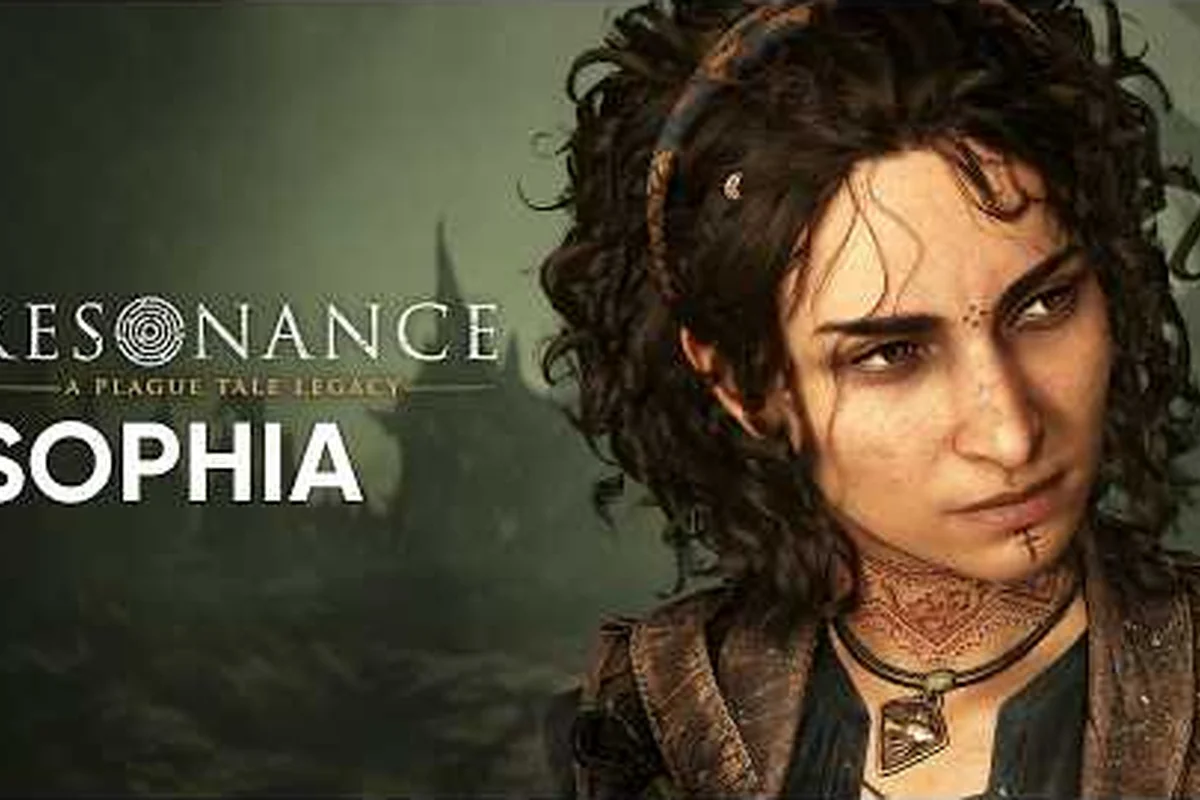
When Asobo Studio revealed Sophia as the standalone lead of Resonance: A Plague Tale Legacy, the immediate question was how a supporting smuggler from Requiem could carry an entire prequel. The resonance a plague tale legacy sophia design answer arrives through a devblog that positions her as a child of the sea — age 22, fiercely independent, and carrying visual storytelling in every medallion and stitch of her outfit. This character rebuild matters because Sophia is no longer Amicia's brief ally, but the full narrative engine driving the 1334 Minotaur's Island arc.
Sophia Design Philosophy And The Seadogs Identity
The core of resonance a plague tale legacy sophia design rests on translating a secondary character into a protagonist without losing what made her memorable. According to the GamingBolt devblog coverage, Asobo designers frame Sophia as a product of abandonment and self-reliance, which shapes both her combat posture and her wardrobe. Rather than recycling Amicia's hesitant sling-user silhouette, the team built Sophia's visual identity around her years among the Seadogs crew, a maritime smuggling network operating along the 14th-century French coastline.
Visual Language Of Medallions And Fabric
The outfit details function as wearable backstory. Sophia's medallions reference crew bonds, survival markers, and sea-trade tokens accumulated over years of running goods through blockaded ports. Her layered fabrics suggest constant movement between ship decks and coastal hideouts, while the worn leather edges communicate a fighter who has scraped through more than one ambush. The design team avoided ornate armor because a smuggler prioritizes mobility and concealment over battlefield presence — a deliberate contrast to the heavily armored Theseus figure who represents institutional authority in Legacy.
| Design Element | Narrative Signal | Gameplay Reflection |
|---|---|---|
| Medallion cluster | Crew loyalty, survival milestones | Tied to relationship progression with Leni |
| Asymmetric shoulder wrap | Quick weapon access, maritime practicality | Faster draw animation for dagger throws |
| Faded sea-salt fabric | Years of coastal smuggling | Environmental camouflage in dock districts |
| Scarred forearm bracer | Close-quarters fight history | Parry window visual cue |
| Unbound hair | Free spirit, rejection of court norms | Distinct silhouette during chase sequences |
The design language deliberately avoids the noble refugee aesthetic that defined Amicia's arc. Sophia reads as someone who chose the sea over safety, which aligns with Focus Entertainment's official story overview describing her as a fierce young smuggler pulled toward Minotaur's Island while an entire army hunts her down. That choice — the sea over safety — becomes the emotional spine of her design evolution.
From Requiem Supporting Role To Legacy Lead
Players first met Sophia in A Plague Tale: Requiem, but the resonance a plague tale legacy sophia design task was to reverse-engineer who she was fifteen years earlier. The devblog confirms Sophia is 22 years old during Legacy's 1334 timeline, meaning her Requiem appearance represents a woman shaped by the events players now control. Asobo's writers, led by Carol Ann Banuls, treated this prequel as a character study rather than a simple origin story, which is why the protagonist guide framing matters for understanding her combat and dialogue choices.
Standalone Rebuild Versus Companion Port
Reusing a companion model would have been the cheap route, but the devblog makes clear Asobo rebuilt Sophia's rig, animations, and facial expressions from scratch. The rationale stems from how differently a lead character must emote during long exploration stretches versus a supporting NPC who appears in short bursts. A protagonist carries the camera for dozens of hours, which demands a wider range of idle states, reaction animations, and combat transitions.
| Character State | Requiem Sophia | Legacy Sophia |
|---|---|---|
| Combat role | Supportive ally with brief skirmishes | Full melee and ranged kit |
| Emotional range | Reactive to Amicia's arc | Self-driven motivation arc |
| Visual detail | Secondary silhouette | High-detail lead model |
| Dialogue frequency | Scene-dependent | Constant environmental commentary |
| Physicality | Scripted actions | Player-driven traversal and combat |
This rebuild also explains why the Steam Community Hub shows active debate over protagonist design among players comparing Sophia to Amicia. Some expected a familiar face swap, while Asobo delivered a distinct physicality grounded in maritime labor rather than aristocratic flight. The resonance a plague tale legacy cast therefore centers on a lead who feels like a new character while retaining recognizable threads from Requiem continuity.
Theseus Character And The Minotaur Island Frame
No analysis of resonance a plague tale legacy sophia design works without examining the opposing force. The question who is Theseus in Resonance points to a figure named after the mythological Athenian hero who slew the Minotaur — but Legacy inverts that legend. Here, Theseus functions as the pursuer, the institutional blade sent to capture or kill Sophia before she reaches the island. The theseus minotaur king athens game parallel gives players a historical-mythological anchor for understanding his role.
Mythological Parallels And Narrative Function
In the original myth, Theseus enters the labyrinth voluntarily to kill the Minotaur and free Athens from tribute. Legacy's Theseus appears to represent the opposite: a warrior enforcing the crown's will, hunting a smuggler who threatens whatever secret Minotaur's Island conceals. This inversion creates dramatic tension because players know the myth's ending but cannot predict how Asobo's version resolves. The Wikipedia development context notes the game drew combat inspiration from Ghost of Tsushima, Sekiro, and Sifu, which suggests Theseus confrontations will emphasize parry timing and posture breaks rather than simple health attrition.
| Myth Element | Classical Version | Legacy Interpretation |
|---|---|---|
| Theseus role | Hero who kills Minotaur | Hunter enforcing crown authority |
| Minotaur | Monster in labyrinth | Ambiguous island force or creature |
| Labyrinth | Physical maze | Political and environmental trap |
| Ariadne's thread | Escape mechanism | Possibly Sophia's smuggling routes |
| Athens tribute | Youth sacrifice | Unknown island secret cost |
The theseus minotaur king athens game keyword captures player curiosity about whether Legacy will honor or subvert the myth's conclusion. Given the prequel's fifteen-year gap before Requiem, Sophia's survival is canonically guaranteed, but Theseus's fate remains open — a design choice that lets Asobo build stakes around how the chase unfolds rather than whether the protagonist lives.
Leni Companion And The Cast Around Sophia
A protagonist guide for resonance a plague tale legacy sophia design must cover the supporting cast, and the resonance a plague tale legacy leni companion keyword points to a key relationship. Leni serves as Sophia's anchor during the island arc, a presence that contrasts the solitary smuggler's default independence. While the devblog focuses on Sophia's arc, community data suggests Leni represents the emotional cost of letting someone close when your survival instincts demand distance.
Companion Dynamics Versus Amicia And Hugo
The Requiem template paired a protective older sibling with a vulnerable younger one. Legacy's leni companion dynamic shifts that formula because Sophia and Leni share a peer relationship built on mutual reliance rather than guardianship. This matters for gameplay because Leni's presence likely informs dialogue options, combat assists, and environmental navigation without reducing Sophia's agency as the sole playable lead.
| Relationship Axis | Requiem (Amicia-Hugo) | Legacy (Sophia-Leni) |
|---|---|---|
| Power dynamic | Protector-dependent | Peer-partnership |
| Emotional core | Guilt and protection | Trust and self-reliance tension |
| Gameplay role | Escort and stealth mechanic | Companion assists and story beats |
| Conflict source | External threats to Hugo | Internal walls Sophia built |
| Resolution arc | Sacrifice and loss | Unknown — prequel opens options |
The broader resonance a plague tale legacy cast includes Seadogs crew members whose medallions appear on Sophia's outfit, plus the pursuing army forces under Theseus. Asobo's 70-person team on the in-house Zouna engine allowed for detailed character work across a focused cast rather than sprawling NPC counts, which aligns with the studio's narrative-first approach.
Practical Takeaways From The Sophia Design Devblog
For players wanting a protagonist guide that translates design analysis into playable insight, the resonance a plague tale legacy sophia design devblog offers concrete anchor points. Understanding why Sophia fights the way she does — maritime improvisation rather than formal training — helps explain the lower difficulty tuning Asobo applied compared to its Sekiro and Sifu inspirations. The goal was accessibility without sacrificing the weight of each confrontation.
Reading The Outfit As A Build Map
Sophia's visual design functions as a soft skill-tree preview. The medallion cluster hints at relationship progression, the asymmetric shoulder wrap suggests quick-throw ranged options, and the scarred forearm bracer signals a parry-focused melee kit. Players who read the outfit before the first fight will recognize which combat verbs the game rewards. The dodge guide approach connects these visual cues to specific timing mechanics that define Sophia's scrappy, evasive combat style.
-
Medallions indicate crew bond levels that unlock companion assists
-
Shoulder wrap corresponds to dagger throw and quick-swap animations
-
Forearm bracer marks the parry window during Theseus duels
-
Unbound hair reads as a chase-sequence silhouette, not just aesthetic
-
Sea-salt fabric suggests environmental camouflage opportunities in dock zones
The resonance a plague tale legacy theseus character analysis also informs build priorities. Since Theseus represents a heavily armored, posture-heavy opponent inspired by Ghost of Tsushima duels, players should expect fights that reward patience and timing over aggression. The character design language — Sophia's mobility versus Theseus's weight — translates directly into combat rhythm.
Frequently Asked Questions
What makes Sophia's design different from Amicia's?
Sophia's design reflects maritime labor and self-reliance, while Amicia's arc centered on aristocratic flight and protection. The medallion cluster and sea-salt fabric signal crew bonds and coastal smuggling, whereas Amicia's evolving outfits tracked her descent from noble comfort into survival necessity. Asobo rebuilt Sophia's rig entirely to support her role as a lead.
Why is Theseus named after the mythological hero?
The name creates dramatic irony because Legacy inverts the myth. Classical Theseus kills the Minotaur to free Athens, but Legacy's Theseus hunts Sophia as a crown enforcer. The theseus minotaur king athens game parallel gives players a familiar frame while leaving the resolution open, since Sophia's survival is canonically guaranteed but Theseus's fate is not.
How old is Sophia in Resonance: A Plague Tale Legacy?
Sophia is 22 years old during the 1334 timeline, according to the devblog. This places the events fifteen years before A Plague Tale: Requiem, where players first met her. The age gap means Legacy explores the formative experiences that shaped the woman players encounter later, focusing on abandonment and self-reliance.
Does Leni replace Hugo as the companion dynamic?
Leni offers a peer partnership rather than the protector-dependent bond Amicia shared with Hugo. The resonance a plague tale legacy leni companion relationship centers on trust and mutual reliance, which shifts both emotional stakes and gameplay. Sophia remains the sole playable lead, with Leni providing story depth and contextual assists.
What combat inspirations shaped Sophia's fighting style?
Asobo cited Ghost of Tsushima, Sekiro, and Sifu, but tuned difficulty deliberately lower. Sophia's maritime background shapes an improvisational, evasive style — quick throws, parry windows marked by her forearm bracer, and mobility over armor — prioritizing scrappy Seadogs survival over formal dueling technique.