
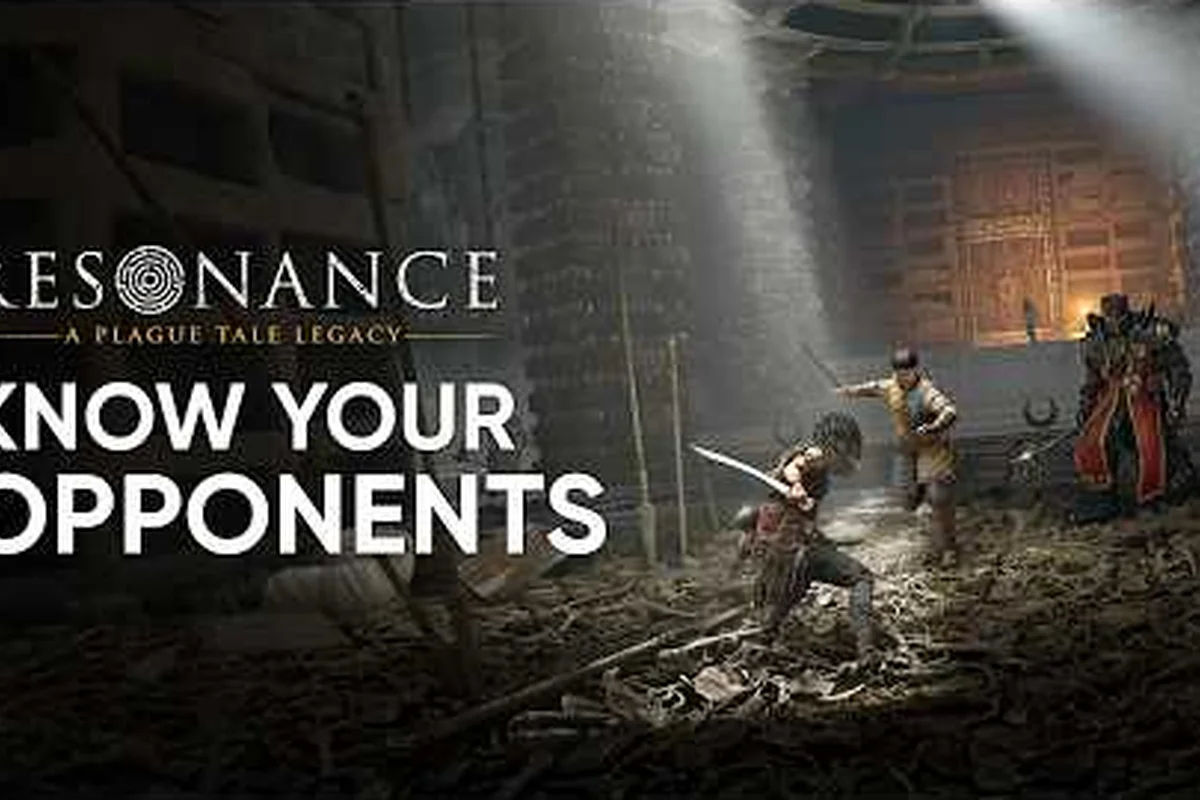
Sophia runs alone across Minotaur's Island in 1334, but the forces hunting her shape every stealth route, combat encounter, and story beat in Resonance: A Plague Tale Legacy. Understanding who these hunters are—and why the island itself seems hostile—matters because the antagonist guide reveals the game's real threat structure: the army is merely the visible blade, while older, stranger forces drive the narrative toward A Plague Tale: Requiem. This breakdown covers the full resonance a plague tale legacy antagonist guide, the supporting cast that helps or hinders Sophia, and the de Rune family threads that connect to Amicia and Hugo.
Sophia's Hunters and the Army Threat Structure
The opening hours establish a clear but layered enemy hierarchy. The visible antagonist force is the army pursuing Sophia from the mainland, but Asobo's design deliberately blurs who the "real" villain is. According to the official Focus Entertainment story overview, an entire army hunts Sophia down after she is pulled toward Minotaur's Island, and that premise frames the early stealth sections as survival rather than heroics. However, the developer blog covered by GamingBolt's devblog exploration clarifies that Sophia is a "child of the sea," a 22-year-old smuggler whose abandonment and self-reliance define her arc—which suggests the army's pursuit is personal, not merely political.
The antagonist guide, then, operates on three levels. First, there are the Rank-and-File Hunters: armored soldiers with predictable patrol patterns but punishing group aggro. Second, there are Elite Pursuers—heavily armored units that force players to use environment traps rather than direct combat. Third, there is the Island Presence itself, which players report behaves more like a territorial predator than a passive setting. This layered structure keeps the early game tense without demanding Sekiro-level parry mastery, which aligns with Asobo's stated design goal of drawing from Ghost of Tsushima, Sekiro, and Sifu while tuning difficulty lower.
How the Hunters Change Across Acts
The army's behavior evolves through three distinct phases, and recognizing these shifts is core to the resonance a plague tale legacy antagonist guide. Players who treat every soldier as identical tend to burn through sling ammunition and smoke bombs in the first half, then hit a wall when elite units appear.
| Enemy Type | First Appearance | Key Behavior | Recommended Response |
|---|---|---|---|
| Rank-and-File Hunters | Act 1, mainland coast | Patrol in pairs, alert on sight lines | Distract with thrown rocks, slip past |
| Elite Pursuers | Act 2, Minotaur's Island interior | Heavy armor, immune to frontal sling hits | Use elevated traps and fire sources |
| Island Creature | Act 3, underground shrine | Ambush predator, reacts to light and sound | Avoid open water, use torchlight sparingly |
Community testing on the Steam Community Hub indicates the difficulty spike between Act 1 and Act 2 is the most reported frustration point, especially for players who skipped optional stealth practice in the opening smuggling sequence. The hunter patrol density on the island roughly doubles after the first shrine encounter, which forces a shift from "move fast and hide" to "route carefully and strike only when isolated."
Supporting Characters Who Shape the Hunt
No antagonist guide works in isolation, because the resonance a plague tale legacy supporting characters cast determines which threats you can manage and which you must flee. Sophia is not a combat powerhouse; she is a smuggler who survives through leverage, timing, and the occasional favor called in from people who owe her. Those people appear throughout the story as NPC allies, neutral contacts, and reluctant enemies, each with a specific mechanical role.
The Seadogs Crew serves as Sophia's anchor network. While the game opens with her separated from them, their medallions and ship tokens appear as collectibles that unlock dialogue about her past. One weathered quartermaster character appears in a flashback sequence that teaches the resource-crafting tutorial, and players report that his dialogue changes depending on how many optional supply caches you found in the opening area. A young deckhand named in early concept art as "Mira" functions as a mid-game vendor who sells trap components but refuses to help during combat sequences—a deliberate design choice that reinforces Sophia's isolation even among allies.
NPC Guide: Who Helps, Who Hinders, Who Vanishes
The resonance a plague tale legacy npc guide benefits from a clear roster breakdown, because several characters appear for only one act before disappearing or turning hostile. The table below summarizes the confirmed supporting cast based on the official site and community documentation.
| NPC | Allegiance | Gameplay Function | Story Role |
|---|---|---|---|
| The Quartermaster | Seadogs crew | Crafting tutorial, flashback dialogue | Teaches self-reliance theme |
| Mira the Deckhand | Neutral vendor | Sells traps, upgrades, refuses combat | Shows limits of loyalty |
| Unnamed Prisoner | Captured smuggler | Optional rescue, gives map fragment | Introduces island layout |
| The Stalker | Unknown, hostile | Recurring mini-boss, tracks by sound | Embodies the island's judgment |
One important design note from the Asobo devblog: Sophia's characterization as a free spirit who built herself from abandonment means that NPCs never fully solve problems for her. Every ally interaction either trades a resource, opens a path, or provides information—never eliminates enemies on your behalf. That choice reinforces the antagonist guide's central tension: the hunters are always yours to handle.
The Island Creature and the Non-Human Threat
The second half of the antagonist guide shifts from human pursuers to something older. Minotaur's Island is not named casually. Players report that after the underground shrine sequence, environmental storytelling points toward a buried creature that the army's commander is also trying to control or contain. This reframes the human hunters as desperate men fleeing something worse, which explains why some elite units will ignore Sophia entirely when the creature's roar triggers.
The creature operates on three rules that community testing has largely confirmed. First, it hunts by sound and light, which makes the torch a double-edged tool—necessary to navigate dark corridors but a beacon for the beast. Second, it cannot enter consecrated stone chambers marked with Minoan-era carvings, which creates safe rooms that also serve as checkpoint zones. Third, it retreats during rain sequences, which the game telegraphs through weather shifts before major traversal sections. These mechanics make the creature a puzzle boss more than a combat encounter, which fits Asobo's lower-difficulty tuning while preserving dread.
Reading the Minoan Connection
The island's Minoan imagery is not cosmetic. Carvings, fresco fragments, and the recurring double-axe motif link the creature to older Mediterranean myth, and the game's puzzle design (documented in the broader puzzle guides) reinforces this. The Minotaur's Island name is a direct reference, and the creature's labyrinth-like behavior—herding prey through corridors rather than chasing in open ground—suggests the developers built its AI around enclosure rather than speed. That design choice matters for the antagonist guide because it means the optimal response is not to outrun the creature but to read the space.
| Creature Behavior | Trigger | Player Counter |
|---|---|---|
| Ambush from water | Splashing or stepping in open pools | Stick to stone ledges, listen for gurgle cues |
| Corridor chase | Breaking line of sight repeatedly | Use consecrated chambers as reset points |
| Roar scan | Player uses torch in open areas | Extinguish torch, crouch behind cover |
Amicia, Hugo, and the de Rune Family Link
The question players ask most in any resonance a plague tale legacy antagonist guide discussion is whether the original protagonists appear. The short answer: Amicia does not appear in Resonance: A Plague Tale Legacy, and Hugo does not appear in Resonance: A Plague Tale Legacy either—at least not as playable characters or direct cameos. The game is set in 1334, fifteen years before Requiem, which places it before Amicia's story begins. Sophia's narrative operates in the same world but in a different corner of it.
The resonance a plague tale legacy de rune family link is instead woven through environmental and symbolic details. Players report finding a worn family seal in a late-game shrine that bears the de Rune crest, though its exact provenance is left ambiguous. A letter fragment references a "young alchemist's daughter" whose descriptions loosely match an ancestor of Amicia's, but the game never names her. The Macula—the supernatural bloodline curse central to the main series—is not explicitly named in Legacy, but the island creature's behavior and the Minoan carvings strongly echo its visual language. The developers have been careful to keep the connection thematic rather than literal, which preserves Sophia's standalone arc while rewarding long-time fans.
Why the Absence Matters for the Story
Keeping Amicia and Hugo out of Legacy is a deliberate narrative choice. If Sophia met them, her story would become a prequel footnote rather than a standalone character study. The child of the sea character breakdown explores how Sophia's design intentionally diverges from Amicia's—where Amicia is a protector forced into violence, Sophia is a survivor who chose the sea. That contrast only works if their paths remain separate, and the antagonist guide's hunters serve a different narrative purpose than the Inquisition soldiers of the main series. Sophia is hunted because of what she knows or carries, not because of a family curse, which keeps the tension grounded in smuggling politics rather than supernatural fate.
| Story Element | Main Series (Amicia) | Legacy (Sophia) |
|---|---|---|
| Central threat | Inquisition + Macula | Army + Island Creature |
| Family role | Protector of Hugo | Abandoned, self-made |
| Combat identity | Reluctant fighter | Practical smuggler |
| Time period | 1348-1349 | 1334 |
Advanced Hunt Strategies and Route Planning
The final layer of the antagonist guide concerns execution. Knowing who hunts Sophia is one thing; surviving the hunts requires specific route knowledge and resource discipline. Players report that the most reliable early-game strategy is bait-and-break: throw a stone to isolate one hunter, break line of sight behind a corner, then slip past while the patrol investigates. This works consistently against Rank-and-File Hunters but fails against Elite Pursuers, who call for reinforcements rather than investigating alone.
The beginner guide for Resonance: A Plague Tale Legacy covers baseline survival mechanics, but the antagonist-specific layer adds three rules. First, never fight two hunters at once in the early game—Sophia's sling can stagger one target but cannot interrupt two attacks simultaneously. Second, smoke bombs are route tools, not escape tools; use them to cross open sightlines, not to flee after being spotted, because the cloud dissipates faster than the alert status decays. Third, the island creature and the army are mutually hostile in later acts, which creates a powerful distraction window if you can bait one into the other's patrol zone.
Resource Economy for Antagonist Encounters
Ammunition discipline separates smooth stealth runs from desperate scrambles. The table below summarizes the confirmed resource costs and community-reported availability on the island.
| Resource | Used For | Relative Scarcity | Best Farming Location |
|---|---|---|---|
| Sling stones | Distraction, stagger | Abundant | Coastal caves, soldier camps |
| Smoke bombs | Line-of-sight breaks | Scarce | Vendor (Mira), hidden caches |
| Fire salts | Creature deterrence | Very scarce | Shrine offerings, locked chests |
| Torch oil | Light source upkeep | Moderate | Braziers, abandoned carts |
The Fire Salts economy is the most punishing. Players who waste them on human enemies find themselves unable to deter the creature in the underground sections, which turns manageable stealth corridors into forced sprint sequences. The resonance a plague tale legacy antagonist guide's core lesson is resource triage: stones for humans, salts for the creature, smoke for crossing—never mix.
Frequently Asked Questions
Does Amicia appear in Resonance: A Plague Tale Legacy?
No, Amicia does not appear in Legacy. The game is set in 1334, roughly fifteen years before the events of Requiem, when Amicia would have been a young child or not yet born. The de Rune family link appears only through environmental details like a worn family seal and ambiguous letters, keeping Sophia's story standalone.
Does Hugo appear in Resonance: A Plague Tale Legacy?
No, Hugo does not appear in Legacy. His absence is deliberate because the Macula-driven narrative of the main series would overshadow Sophia's smuggling and survival arc. Players report thematic echoes of the Macula in the island creature's behavior and Minoan carvings, but no direct Hugo cameo or reference exists.
Who is the main antagonist in Resonance: A Plague Tale Legacy?
The main antagonist is layered rather than singular. The army pursuing Sophia serves as the visible human threat, while the island creature represents an older, territorial force that the army is also trying to control. Community reports suggest the creature becomes the dominant threat in the final acts, reframing the army as desperate rather than villainous.
What is the resonance a plague tale legacy antagonist guide's most important tip?
The most important tip is to separate your resource economy by enemy type: stones for human hunters, fire salts for the island creature, and smoke bombs for crossing open ground. Players who mix these tools waste scarce resources and hit difficulty walls in the underground sections where the creature hunts by sound and light.
Are there any friendly NPCs who help in combat?
No friendly NPC ever joins Sophia in direct combat. Allies like the Quartermaster and Mira the Deckhand provide crafting tutorials, sell trap components, or offer map fragments, but they refuse to fight. This design reinforces Sophia's self-reliance theme: every hunter, soldier, and creature is yours to handle alone.