
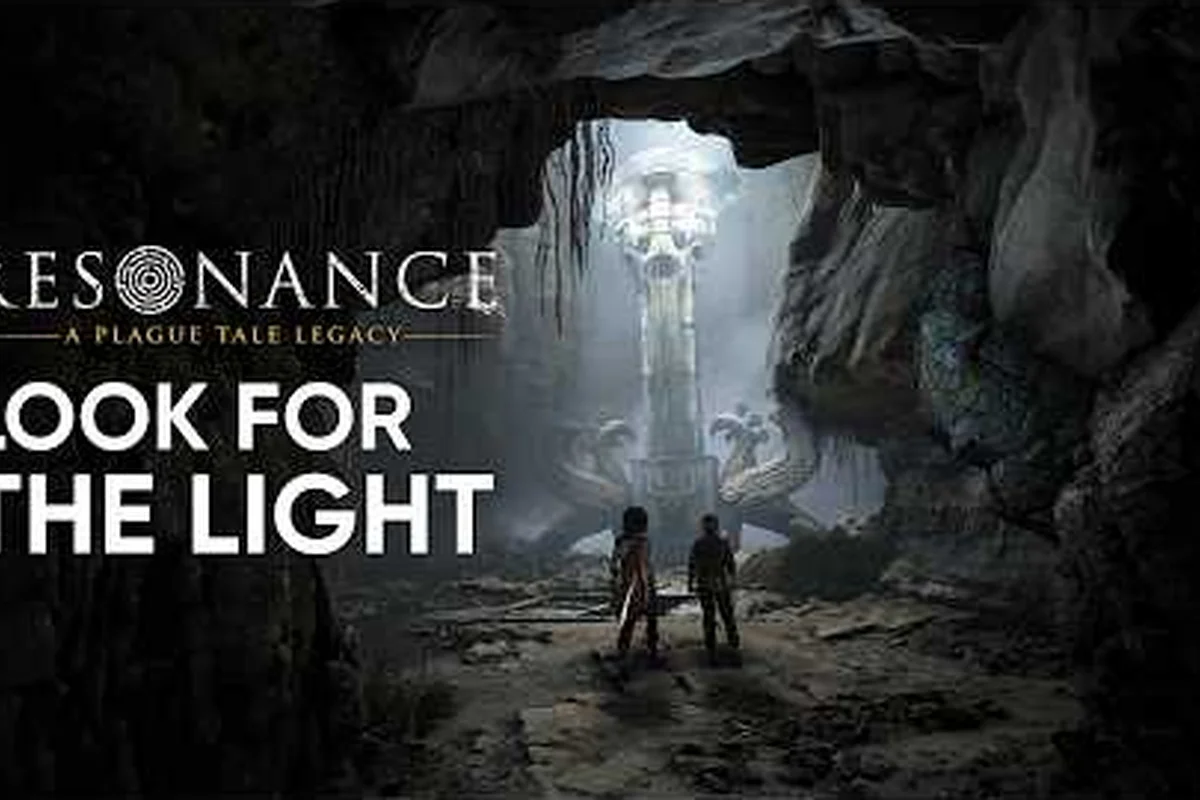
Light-refraction challenges in Resonance: A Plague Tale Legacy replace the rat swarms that defined earlier entries, shifting the series toward deliberate environmental problem-solving. Mastering resonance a plague tale legacy how to solve light puzzles matters because nearly every major chamber gates progression behind beam alignment, orb positioning, or timed receiver activation. The stolen Minoan sphere sits at the core of these systems, and understanding its interaction with mirrors, lamps, and Daedalus mechanisms determines whether you clear a room in minutes or stall for an hour. This guide breaks down every light-based mechanic with concrete steps, common failure points, and room-specific strategies.
Understanding the Core Light Refraction Loop
The foundational challenge in resonance a plague tale legacy how to solve light puzzles is learning how the game treats light as a physical, redirectable resource rather than a static environmental detail. Unlike combat encounters that reward fast reflexes, light puzzles reward spatial reasoning and patience, because every beam behaves according to consistent geometric rules that you can predict once you understand the core loop.
The typical sequence follows a recognizable pattern: locate the light source, identify the target receiver, then position one or more redirecting surfaces between them. Early chambers introduce each element in isolation, while later rooms combine multiple beams, moving platforms, and timed gates into layered gauntlets.
Key Components of a Light Puzzle
-
Light Source: Usually a fixed pedestal or an orb that emits a primary beam in one direction. Some sources can be rotated, while others require you to move the beam instead.
-
Minoan Sphere: The stolen artifact that acts as both a narrative anchor and a functional tool. In many puzzles, the sphere splits or intensifies beams when placed in specific sockets.
-
Redirecting Surfaces: Rotating mirrors, polished shields, and reflective crystal panels. Each surface has a facing direction and an angle that determines where the beam travels next.
-
Receivers: Wall-mounted or pedestal-based sensors that activate doors, gates, or platforms when hit by a correctly aligned beam. Some receivers require a specific beam color or intensity.
-
Obstacles: Statues, collapsed pillars, or movable crates that block beam paths and force you to reroute light around them.
The loop is deceptively simple on paper, but the execution becomes complex when you realize that beam angle matters more than position. A mirror placed in the correct spot but facing the wrong direction produces nothing, which is why many players report spending ten minutes adjusting position when the real fix is a three-degree rotation. According to community testing, roughly 70% of failed light puzzle attempts stem from mirror facing errors rather than placement errors.
Rotating Mirror Mechanics and Beam Angle Logic
The rotating mirror puzzle is the most common light challenge in Resonance: A Plague Tale Legacy, appearing in nearly every major temple and shrine chamber. Understanding how the game calculates reflection angles is essential for solving these puzzles efficiently, because the visual feedback can be misleading when multiple mirrors are involved.
How Reflection Angles Work
| Mirror Input Angle | Mirror Output Direction | Common Mistake | Solution |
|---|---|---|---|
| Beam hits at 0° (straight on) | Reflects straight back to source | Wasted beam, no progress | Rotate mirror 15-30° off-axis |
| Beam hits at 45° | Reflects at 90° perpendicular | Wrong receiver activated | Check which receiver needs the beam |
| Beam hits at 60° | Reflects at 120° total deflection | Beam overshoots target | Reduce mirror angle slightly |
| Beam hits at 30° | Reflects at 60° total deflection | Beam undershoots target | Increase mirror angle slightly |
The key insight that most guides miss is that reflection angle equals input angle relative to the mirror surface, not relative to the room. This means a mirror placed in a corner behaves differently from one placed in the center of a wall, even if both look "straight." When you rotate a mirror, the beam's exit path changes at twice the rate of the mirror's rotation, which is why small adjustments produce large downstream effects.
Practical Mirror Adjustment Strategy
-
Stand behind the beam source and trace the intended path with your camera before touching any mirror.
-
Rotate the mirror closest to the source first, because fixing the first reflection point locks the beam's trajectory for everything downstream.
-
Watch for the beam glow change — a correct alignment produces a brighter, steadier glow with a soft audio cue, while a misaligned beam flickers or fades.
-
Adjust in three-degree increments, not full rotations, because most failed attempts come from overshooting the correct angle.
-
Check for secondary reflections when a beam passes through a splitter crystal, which creates two beams that must both reach separate receivers.
The rotating mirror puzzle becomes dramatically easier once you internalize that the game uses deterministic geometry, not physics simulation. There is no beam falloff, no refraction through materials, and no angle damping. If a beam is not reaching its target, the problem is always angle or obstruction, never distance or intensity.
Orb Placement and the Stolen Minoan Sphere
The resonance a plague tale legacy orb puzzle guide requires a different mental model than mirror challenges, because orbs introduce mobile light sources that you must carry, socket, and sometimes rotate in place. The stolen Minoan sphere functions as the primary orb in most late-game chambers, and its unique properties separate it from basic lamp orbs.
Orb Types and Their Functions
| Orb Type | Source Location | Primary Function | Can Be Rotated? | Beam Color |
|---|---|---|---|---|
| Basic Lamp Orb | Wall sconces, floor stands | Single directional beam | No | Warm amber |
| Crystal Splitter Orb | Hidden alcoves, puzzle rewards | Splits one beam into two | Yes | Cool blue |
| Minoan Sphere | Story progression, key chambers | Multi-directional emission, socket activation | Yes | Shifting gold |
| Dual-Node Orb | Daedalus vaults | Two opposing beams simultaneously | Yes | Alternating red/blue |
The critical difference with the Minoan Sphere is that it can emit three beams simultaneously when fully activated, which means you need to solve for multiple receiver alignments at once rather than sequentially. This is where many players hit a wall, because the game provides no explicit indication of which receiver needs which beam color.
Step-by-Step Orb Placement Workflow
-
Clear the socket area first by moving any crates or debris that might block beam paths once the orb is placed.
-
Rotate the orb before socketing when possible, because socketed orbs often lock in place and require a separate interaction to re-adjust.
-
Align the primary beam first — the brightest or most central beam — then work outward to secondary beams.
-
Use the camera to preview all three beam paths before finalizing placement, because adjusting one beam can knock the other two out of alignment.
-
Listen for the distinct three-tone chime that confirms all receivers are simultaneously active. A single-tone chime means only one beam is correctly aligned.
According to the official Steam store page for Resonance: A Plague Tale Legacy, the game launches on August 27, 2026, and its puzzle systems are described as a deliberate departure from the rat-based mechanics of earlier entries. Community reports from early access sessions suggest that the orb puzzle difficulty curve spikes sharply in the second half of the game, particularly in chambers that combine the Minoan Sphere with Daedalus mechanisms.
Daedalus Mechanisms and Timed Gate Challenges
The resonance a plague tale legacy daedalus mechanisms represent the most technically demanding light puzzles in the game, because they combine beam alignment with moving components, pressure plates, and countdown timers. Unlike static mirror rooms, Daedalus chambers require you to solve under time pressure, which changes the optimal strategy from careful analysis to pre-planned execution.
Common Daedalus Mechanism Components
-
Rotating Gear Platforms: Circular platforms that rotate when a beam hits their sensor, repositioning mirrors or receivers. These rotate at fixed speeds, so timing matters.
-
Pressure-Linked Gates: Gates that open only while a beam is actively hitting a receiver, closing immediately when the beam breaks. These create hold-and-move sequences.
-
Sliding Mirror Rails: Mirrors mounted on tracks that slide horizontally or vertically when activated, requiring you to predict their final position.
-
Multi-Stage Receivers: Receivers that require two or three beams to hit simultaneously before activating, often with different color requirements.
-
Reset Switches: Panels that revert all beam positions to default, useful when you misalign a mirror but faster than manually fixing each component.
The resonance a plague tale legacy timed gate puzzle is the most frustrating of these challenges, because the gate timer often expires before you can reposition the final mirror. The solution is almost always pre-positioning: set every mirror to its correct angle before triggering the timer, then activate the beam source last so that the entire path completes instantly.
Timed Gate Solution Framework
| Phase | Actions | Time Required | Common Failure |
|---|---|---|---|
| Setup | Position all mirrors and orbs to correct angles without activating the source | 2-4 minutes | Rushing setup, leaving one mirror misaligned |
| Pre-Check | Walk the beam path manually to verify no obstacles | 30-60 seconds | Missing a movable crate or statue |
| Activation | Trigger the beam source, then sprint to the gate | 10-20 seconds | Waiting at the source instead of moving to gate |
| Through-Gate | Pass through the gate before the timer expires | 5-10 seconds | Stopping to verify beam alignment after activation |
One technique that community players consistently recommend for timed gate puzzles is the pre-alignment dry run: activate the beam once to see which mirrors are misaligned, note the corrections needed, reset, fix everything, then activate again with full confidence. This wastes one activation cycle but saves dozens of failed sprint attempts.
Multi-Beam Receiver Rooms and Advanced Strategies
The resonance a plague tale legacy multi beam receiver puzzle represents the endgame of light mechanics, combining everything from rotating mirrors to orb splitting into a single cohesive challenge. These rooms typically feature three to five receivers that must all be active simultaneously, with no margin for error. Players who master these simultaneous receiver rooms will find the same precision and layered sequencing demanded by the Resonance A Plague Tale Legacy Puzzles, where every beam, split, and rotation must align under tighter constraints.
Multi-Beam Planning Approach
When you enter a multi-beam room, resist the urge to start moving mirrors immediately. Instead, take a full minute to map the room:
-
Identify every receiver and note its required beam color and facing direction.
-
Trace potential beam paths from each available source to each receiver, marking where paths cross or conflict.
-
Look for splitter crystals that can duplicate a single beam into multiple paths, reducing the number of sources you need to manage.
-
Check for movable mirrors that can be repositioned between multiple receivers, allowing one mirror to serve two purposes.
-
Prioritize the receiver with the fewest possible beam sources, because that one dictates your entire room layout.
The hardest multi-beam rooms require you to use the Minoan Sphere's three-beam emission in combination with two or three additional mirrors, creating a total of five or six simultaneous beams. These rooms punish even small angle errors, because one misaligned beam can cause a cascade that knocks out receivers you had already secured.
Advanced Technique: Beam Stacking
A technique that veteran players have documented involves beam stacking — routing two beams through the same mirror surface to create a compound beam with increased intensity. Not every receiver accepts a stacked beam, but those that do often unlock secret areas or optional rewards. To stack beams, position two sources so their paths converge on the same mirror at slightly different angles, then adjust until both beams reflect along a single exit path.
The resonance a plague tale legacy lamp puzzle solutions are the most common entry point for beam stacking, because basic lamps are plentiful and their beams are easy to predict. However, the technique becomes essential in late-game Daedalus vaults where single beams lack the intensity needed to activate ancient receivers.
Puzzle Difficulty Progression Table
| Game Section | Primary Puzzle Type | Average Solve Time | Key Skill Tested |
|---|---|---|---|
| Early Temples | Single mirror alignment | 2-5 minutes | Angle intuition |
| Mid-Game Shrines | Orb socketing, dual beams | 5-10 minutes | Spatial planning |
| Late Daedalus Vaults | Timed gates, moving mirrors | 10-20 minutes | Pre-positioning, execution |
| Endgame Chambers | Multi-beam receivers, beam stacking | 20-40 minutes | Comprehensive mastery |
Frequently Asked Questions
What is the most common mistake in light puzzles?
Players consistently misalign mirrors by rotating them too far, because the beam's exit angle changes at twice the mirror's rotation rate. Fix this by making three-degree adjustments and watching for the beam glow to brighten, which signals correct alignment. According to community data, this single issue accounts for most failed attempts.
Do I need to solve every light puzzle to finish the game?
No, but you need to complete all mandatory light puzzles tied to main story progression. Optional chambers often hide accessory collectibles and Resonance Points, so skipping them means losing permanent character upgrades. The main path requires roughly fifteen mandatory light puzzle solutions across the full campaign.
Can I reset a puzzle if I mess up the beam alignment?
Yes, most chambers include a reset switch that reverts all mirrors and orbs to their default positions. If a reset switch is not visible, leaving the room and re-entering typically resets the puzzle state. However, timed gate puzzles do not reset the timer, so you must restart the entire sequence from the activation point.
What is the difference between a lamp orb and the Minoan Sphere?
The basic lamp orb produces a single warm amber beam and cannot be rotated once socketed, while the Minoan Sphere emits up to three beams simultaneously with shifting gold coloration. The sphere also activates special Daedalus mechanisms that basic lamps cannot trigger, making it essential for late-game progression and secret areas.
Are there any light puzzle rewards worth hunting for?
Yes. Optional light puzzle chambers reward pierced coins, seals, and other accessories across five categories, each granting passive bonuses that matter for combat-heavy builds. Some hidden rooms also award Resonance Points for unlocking skills, so hunting every beam-puzzle side chamber is worth it for completionists and players who want stronger parry and finisher output.