
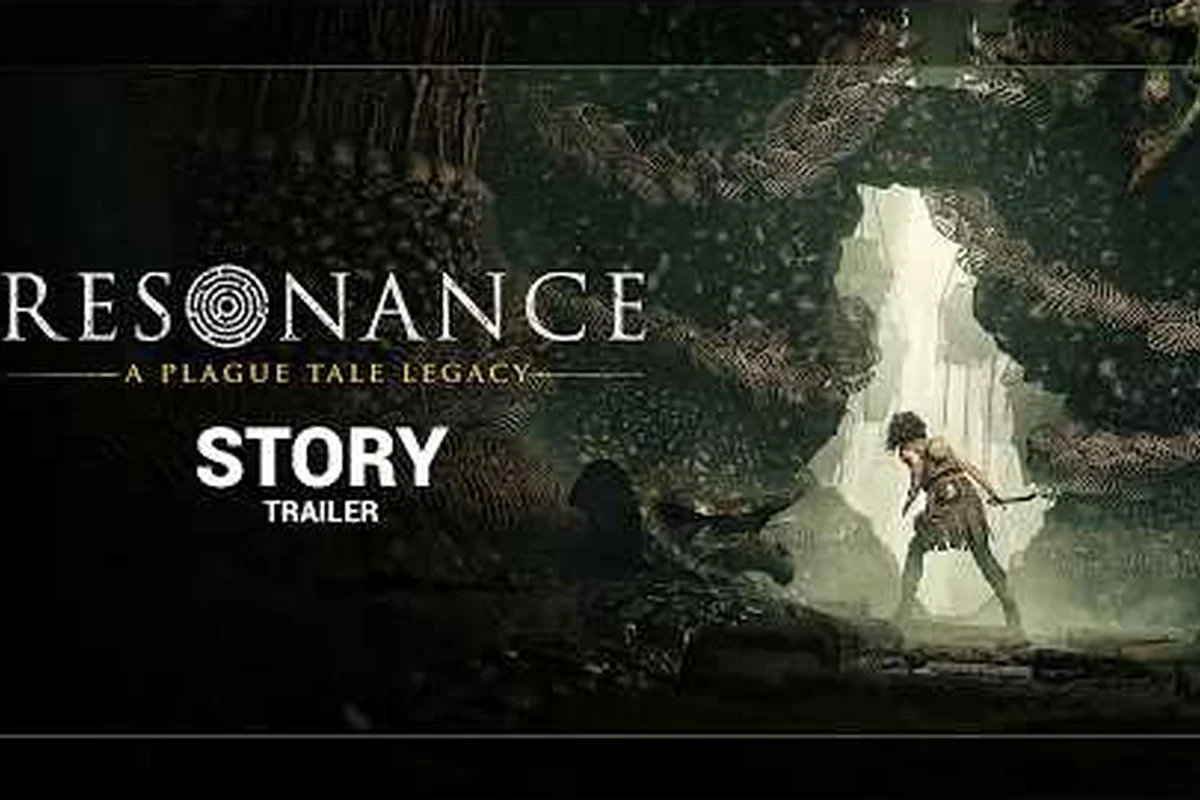
The dual timeline structure in Resonance: A Plague Tale Legacy splits your attention between Sophia's desperate 1334 flight toward Minotaur's Island and Theseus' Minoan Crete flashbacks, which directly reframe how you read every present-day puzzle. Understanding this resonance a plague tale legacy dual timeline explained framework matters because missable lore beats, light-refraction puzzles, and story-mode pacing all hinge on recognizing which era you are currently influencing. The structure is not cosmetic—it actively changes puzzle solutions, collectible visibility, and your grasp of the Macula legacy.
How the Dual Timeline Actually Works Across Chapters
When you first control Sophia in 1334, the narrative opens fifteen years before A Plague Tale: Requiem, with an entire army hunting her down while she smuggles goods toward the coast. The Minoan flashbacks starring Theseus operate on a separate narrative track that the game interleaves at specific chapter boundaries, usually after you complete a major light-refraction puzzle built around a stolen Minoan sphere. According to the official Focus Entertainment story overview, the two eras are not parallel in the traditional sense—Theseus' memories function as an interpretive lens that reshapes what Sophia believes about the island, the sphere, and the forces pursuing her. This resonance a plague tale legacy dual timeline explained setup creates a structural tension that the game uses to withhold key plot details until the flashbacks reveal them.
How Flashback Triggers and Era Switching Work
The game does not let you freely swap between Sophia and Theseus on demand. Instead, flashbacks trigger automatically when you reach specific story gates, which means you need to plan your exploration around those locked transitions. The following table outlines how the era switching typically flows across a standard playthrough:
| Era | Protagonist | Core Activity | Transition Trigger |
|---|---|---|---|
| 1334 Present | Sophia | Light-refraction puzzles, smuggling, evasion | Reaching a Minoan artifact or story gate |
| Minoan Crete | Theseus | Combat-heavy defense sequences, sphere retrieval | Completing the linked present-day puzzle |
| 1334 Return | Sophia | Interpretation of new lore, altered puzzle context | Flashback epilogue or sphere resonance event |
Because the flashbacks arrive on fixed story beats rather than player command, you cannot grind or sequence-break them in a first playthrough. That design choice matters for anyone following a resonance a plague tale legacy missable content walkthrough, since collectibles hidden inside flashback areas become inaccessible once the sequence ends. Players who rush the main path often discover that certain Resonance Points tied to Theseus' Crete segments are permanently lost, which is why community reports emphasize checking every chamber before moving toward the exit.
What the Minoan Sphere Reveals About the Present
The stolen Minoan sphere is the primary mechanical and narrative link between the two timelines. In Theseus' era, the sphere functions as a source of light that you redirect through lenses and mirrors to unlock sealed passages. In Sophia's 1334 present, the same sphere—or its remnants—appears in the environment as a puzzle device, and its behavior changes depending on what you learned in the preceding flashback. This means the resonance a plague tale legacy dual timeline explained loop is not merely thematic: a flashback can introduce a new light-manipulation technique that Sophia then uses in the next chapter, creating a direct mechanical lineage between eras.
Players who ignore the flashbacks miss not only story context but also practical puzzle instruction. For instance, when Theseus discovers that charged attacks make his blade glow white before a heavy release, that visual language carries forward into Sophia's later encounters, where similar white-glow cues signal environmental interactivity. The connection is subtle enough that first-time players often overlook it, which is why a thorough story mode walkthrough benefits from treating each flashback as a tutorial disguised as narrative.
Missable Content Inside the Flashback Sequences
The most consequential part of the dual timeline structure for completionists is that flashback areas are one-time visits with no chapter-select return until you finish the game and unlock New Game+ or post-game free roam. This design turns every Minoan Crete segment into a high-stakes sweep for accessory collectibles, Resonance Points, and hidden lore entries. A resonance a plague tale legacy missable content walkthrough should therefore prioritize flashback chapters over present-day free-roam zones, because the latter often remain explorable after the main story. sonance Points**, and hidden lore entries. A resonance a plague tale legacy missable content walkthrough should therefore prioritize flashback chapters over present-day free-roam zones, because the latter often remain explorable after the main story. For instance, cave interiors tied to flashback sequences frequently lock away collectible resonance points behind one-time entry puzzles, so pairing this approach with a focused Resonance A Plague Tale Legacy Cave Walkthrough helps you spot which side passages vanish permanently after the chapter ends.
Collectible Categories and Where They Hide
GamingBolt's mechanics preview catalogs five collectible accessory categories: arm bands, bracelets, beads, seals, and pierced coins. These items are distributed unevenly across both timelines, but the rarest variants tend to spawn in Theseus' Crete environments, where the defense-first melee loop encourages you to linger in combat arenas rather than explore corners. The table below summarizes typical spawn behavior for each category in the dual timeline structure:
| Accessory Category | Primary Location | Missable Risk | Typical Reward |
|---|---|---|---|
| Arm Bands | Sophia's 1334 smuggling routes | Low—areas often revisitable | Stagger resistance bonus |
| Bracelets | Minoan Crete side chambers | High—one-time flashback zones | Parry window extension |
| Beads | Puzzle rooms near spheres | Medium—requires backtracking | Resonance Point yield |
| Seals | Theseus' boss arenas | High—disappear after cutscene | Finisher damage increase |
| Pierced Coins | Hidden alcoves behind light gates | High—missable if puzzle skipped | Lore entry unlock |
The Grapple Hook dual-role traversal tool appears in both eras, but its vertical reach matters most inside Crete, where several bracelets and seals sit on ledges that only become visible after you pull a lever or rotate a mirror. Because the grapple hook's combat and traversal functions are unlocked through story progression, players who enter a flashback with an underdeveloped hook will find certain collectible spots physically unreachable.
How the Defense-First Loop Affects Missable Sweeps
The combat system in Resonance: A Plague Tale Legacy is deliberately defense-first, meaning blocking, parrying, and dodging precede any meaningful attack. Successful parries fill a hidden Stagger Meter, which enables Guard-Breakers and finishers, and this loop directly shapes how you clear a flashback chamber. If you rush enemies without filling the Stagger Meter, you extend fights long enough that you may trigger a cutscene transition before checking for collectibles. The practical takeaway for a resonance a plague tale legacy missable content walkthrough is to clear every enemy wave methodically, use the white-glow charged attack cue to finish stragglers, and only then sweep the arena for loot.
Story Mode Pacing and the No Commentary Walkthrough Fit
Story mode in Legacy is tuned lower on difficulty than its combat inspirations—Ghost of Tsushima, Sekiro, and Sifu—which makes the flashback-heavy narrative more accessible for players who care primarily about the dual timeline plot. A resonance a plague tale legacy story mode walkthrough should emphasize puzzle solutions and lore interpretation over combat optimization, because story mode's relaxed enemy aggression means the challenge shifts toward understanding the sphere mechanics and the Minoan lore reveals.
Story Mode vs. Standard Difficulty Trade-offs
Although story mode reduces combat friction, it does not disable the missable-content rules or the one-time flashback structure. The table below compares how story mode and standard difficulty handle the dual timeline experience:
| Aspect | Story Mode | Standard Difficulty |
|---|---|---|
| Enemy aggression | Low—more time to explore | Moderate—pressure during sweeps |
| Parry timing window | Generous—easier Stagger Meter fills | Tighter—requires practice |
| Flashback missable risk | Same—areas still one-time | Same—no added return option |
| Puzzle hint visibility | Highlighted sphere paths | Less guidance, more trial |
| Resonance Point economy | Same yields, lower combat drain | Same yields, higher potion use |
A resonance a plague tale legacy no commentary walkthrough fits story mode well because the reduced combat noise lets the dual timeline environmental storytelling breathe. No commentary runs on story mode let you observe how the camera frames Theseus' Crete in warmer, older tones compared to Sophia's colder, rain-slicked 1334, a visual distinction that reinforces the era shift without any spoken explanation. Players who record their own no commentary playthroughs often prefer story mode for this reason: the pacing leaves room to linger on environmental details that standard difficulty's combat pressure would bury.
Puzzle-Heavier Structure and the Rat-Free Departure
PC Gamer's release coverage confirms that Legacy replaces rat swarms with light-refraction puzzles built around the stolen Minoan sphere, while a stalking creature keeps chase segments tense. This puzzle-heavier, rat-free approach means the dual timeline story mode walkthrough must spend more time on mirror and lens positioning than on crowd control. The stalking creature, which appears in both eras under different forms, adds a time-pressure element to certain flashback sweeps, so even story mode players need to manage their exploration windows carefully.
Reading the Dual Timeline for Lore and Ending Context
The resonance a plague tale legacy dual timeline explained framework becomes most valuable in the final third of the game, when Theseus' flashbacks stop feeling like historical asides and start mirroring Sophia's choices in direct, sometimes uncomfortable ways. According to the official Focus Entertainment story overview, Sophia is pulled toward Minotaur's Island by forces she does not fully understand, and the Minoan flashbacks gradually reveal that her journey repeats a pattern Theseus already lived—or failed to live—centuries earlier.
What the Minoan Flashbacks Reveal About the Macula Legacy
The Macula's role in the dual timeline is never spelled out in a single exposition dump. Instead, the game scatters clues across both eras: a symbol carved into a Crete wall reappears on a 1334 amulet, a phrase Theseus hears in a vision becomes a song Sophia's companion Leni hums, and the sphere's resonance frequency matches a sound that echoes in the present-day island. Players who complete a full resonance a plague tale legacy missable content walkthrough will collect the pierced coins that unlock the deepest lore entries, which explicitly tie the Minoan sphere to the Macula's origin mythology. This connection reframes the ending of A Plague Tale: Requiem by suggesting the Macula's influence predates the de Rune bloodline by millennia.
How the Timelines Reframe the Ending
Because the final chapter runs Sophia and Theseus' stories in close parallel, your interpretation of the ending depends on whether you absorbed the flashback lore or skipped through it. The game's timeline shift walkthrough elements—where a present-day puzzle mirrors a Crete puzzle you solved earlier—force you to draw on both eras to reach the climax. Players who rush past the flashbacks often reach the final sphere puzzle without the mechanical vocabulary the Minoan sequences taught, turning what should be a narrative payoff into a frustrating trial-and-error sequence.
Frequently Asked Questions
How many playable eras are in the dual timeline?
Resonance: A Plague Tale Legacy features two playable eras: Sophia's 1334 present and Theseus' Minoan Crete flashbacks. The flashbacks trigger automatically at story gates, not through player choice, which means you experience the eras in a fixed interleaved order rather than switching freely between them.
Can I replay flashback sections to collect missed items?
No, flashback sections are one-time visits during a first playthrough. You cannot return to Theseus' Crete areas until you finish the game and unlock post-game free roam or New Game+. This is why a resonance a plague tale legacy missable content walkthrough prioritizes sweeping each flashback chamber before triggering the exit cutscene.
Does story mode change how the dual timeline works?
Story mode keeps the dual timeline structure intact but lowers enemy aggression and widens parry windows. The missable-content rules remain identical, so flashback areas still disappear after completion. Story mode mainly makes the light-refraction puzzles and lore exploration more comfortable for narrative-focused players.
What is the Minoan sphere's role across both timelines?
The Minoan sphere is the mechanical and narrative link between eras. In Theseus' flashbacks, it powers light-refraction puzzles; in Sophia's present, its remnants appear as puzzle devices whose behavior changes based on what you learned in the preceding flashback, creating a direct mechanical lineage between the two timelines.
Why is the game rat-free compared to previous Plague Tale titles?
Legacy deliberately replaces rat swarms with light-refraction puzzles and a stalking creature to shift focus toward the dual timeline narrative and environmental storytelling. PC Gamer's coverage frames this rat-free departure as a structural change that lets the Minoan and medieval settings breathe without the series' signature swarm pressure.