
Combat
Master Resonance: A Plague Tale Legacy combat — parry timing, dodge windows, guard-breakers, finishers, and skill builds for Theseus' defense-first melee loop.
Introduction
The combat hub dissects Asobo's first-ever melee system, and it matters because everything in Resonance flows through the defensive loop. Blocking absorbs, dodging escapes, but parrying converts: a well-timed parry builds the hidden stagger meter, a full meter opens guard-breaker opportunities, and guard-breakers cascade into finishers that remove elite enemies from group fights entirely. Layered on top are charged attacks — Theseus' blade glows white at full charge — and the grapple hook, which drags enemies off ledges or repositions you instantly. Two skill trees split the identity: Sophia's mainland kit emphasizes parry windows, guard-breaks and energy flow, while Theseus' coliseum tree fills with AoE sweeps, shield play and sword-charge upgrades. Preview coverage compared the feel to Ghost of Tsushima and Sekiro while stressing that Asobo deliberately tuned the barrier lower; these guides map every system so you can find your own rhythm inside it.
Core Combat Systems Ranked
| System | Function | Skill Ceiling |
|---|---|---|
| Parry | Converts defense into stagger buildup | Highest — timing window widens with gear |
| Stagger Meter | Hidden gauge enabling guard-breakers | Reading enemy patterns |
| Guard-Breaker | Punishes turtling enemies post-stagger | Meter management timing |
| Charged Attack | Heavy release at full blade glow | Release-frame knowledge |
| Grapple Hook | Ledge kills plus instant repositioning | Spatial awareness |
| Finishers | Executions altered by equipped blade | Positioning under pressure |
Mechanics Breakdown
Parry & Perfect Parry
The conversion engine — defense becomes stagger becomes execution
Stagger Meter
The hidden gauge that decides when turtles break open
Charged Attacks
Theseus white-glow heavy releases with real commitment risk
Grapple Hook
Ledge executions and instant repositioning in one tool
Finishers
Execution variety tied directly to your equipped blade
Dodge & Repositioning
The safety valve for everything a parry cannot answer
Core Mechanics
Every fight in Legacy runs on the same underlying economy. Enemy attacks telegraph in pattern families; blocking survives them but builds nothing, while parries feed the stagger meter that eventually unlocks guard-breaker openings. The meter is intentionally invisible, which makes rhythm reading the core skill — you learn to feel when an enemy is one clean parry from breaking rather than watching a bar. Charged attacks add a second clock: holding through an opening charges Theseus' blade toward its white-glow release, but committing to the hold risks eating an interrupt. The grapple hook resolves spatial puzzles inside fights, yanking shield-bearing enemies off cliffs or pulling yourself to high ground where archers lose angles. Sophia and Theseus share the skeleton but not the muscle — her kit rewards patient single-target dueling while his rewards crowd control, so mid-game players effectively maintain two combat proficiencies that alternate chapter by chapter.
Advantages
Investing in combat understanding pays across every other category. Combat is Legacy's primary Resonance Point source, so fighting cleanly accelerates skill acquisition for puzzle-adjacent abilities too — energy-gain nodes fund sphere interactions during timed sequences. The achievement roadmap leans heavily this direction as well: preview materials describe flawless-parry-chain and finisher-variety challenges that demand exactly the mechanics these guides teach. Boss encounters reward system fluency disproportionately, since phase transitions appear tuned around stagger management rather than raw damage checks. There is also plain enjoyment economics: players who internalize parry rhythm report the game's hardest arenas becoming its most fun, whereas players who skip system learning hit difficulty spikes the tuning cannot forgive. Finally, understanding enemy families turns stalker-adjacent combat chapters from terror into choreography.
Challenges
Combat guides carry the steepest launch-window uncertainty of any category. Frame data does not exist yet — parry windows, charged-attack release frames and stagger thresholds all derive from preview impressions rather than measured testing, and every specific number here should be treated as provisional until frame-counting communities work through the released build. The genre-comparison framing has failure modes too: players arriving from true soulslikes sometimes over-commit to dodge-heavy habits that Legacy's block-first design punishes, while expecting Sekiro's deflection generosity leads to misjudged aggression. Skill-tree advice ages fastest of all, since balance patches could reshuffle node values within weeks. Treat these pages as conceptual maps rather than build sheets, and expect visible revision passes during the first month after launch.
Frequently Asked Questions
Is the combat actually hard, or soulslike-hard?+
How important is perfect parry versus dodging?+
What does the grapple hook do in fights?+
How do Sophia's and Theseus' skill trees differ?+
Quick Tips
Stop watching enemy weapons and start watching their shoulders — the wind-up tells you blockable versus grab attacks far earlier than blade position ever does. Small habits like this compound across every chapter of the campaign. Small habits like this compound across every chapter of the campaign. Small habits like this compound across every chapter of the campaign.
Hold charged attacks only during confirmed recovery frames after an enemy whiff; releasing into an active combo wastes both the charge and half your stamina. Small habits like this compound across every chapter of the campaign. Small habits like this compound across every chapter of the campaign. Small habits like this compound across every chapter of the campaign.
Scan ledges within five seconds of any elite encounter starting — grapple-hook environmental kills skip entire stagger phases and conserve consumables. Small habits like this compound across every chapter of the campaign. Small habits like this compound across every chapter of the campaign. Small habits like this compound across every chapter of the campaign. Small habits like this compound across every chapter of the campaign.
Featured

Resonance: A Plague Tale Legacy Combat Guide Parry
Understand resonance a plague tale legacy combat guide mechanics: parry timing, perfect parry windows, and how the defense-first loop opens up safe attacks.

Resonance: A Plague Tale Legacy Counter Attack Guide
Master the counter attack after parries with our resonance a plague tale legacy guide to finishers, the stagger meter, and guard breakers that punish foes.

Resonance: A Plague Tale Legacy Crowd Control Tips
Manage multiple foes with resonance a plague tale legacy crowd control tips: critical strikes, lethal blow risk, and no-damage tactics for tough arena fights.
All Articles

Resonance: A Plague Tale Legacy Dodge Guide Tactics
Struggling with hard fights? Get resonance a plague tale legacy dodge guide tactics, combat tips, and Theseus ability synergy for a stronger Sophia build.

Resonance: A Plague Tale Legacy Flawless Parry Streak Guide
Chain a flawless parry streak with our Resonance: A Plague Tale Legacy guide to blade length, moveset timing, and melee discipline without taking damage.
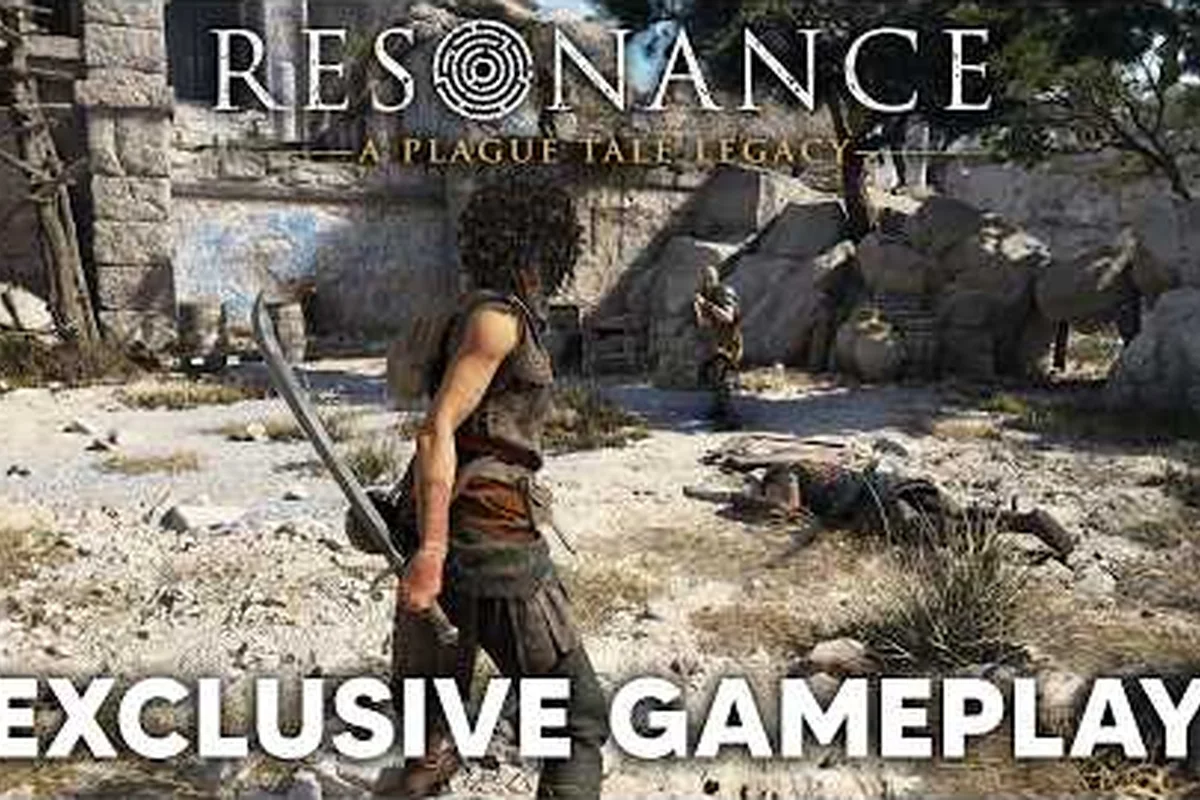
Resonance: A Plague Tale Legacy Ledge Takedown Guide
Use resonance a plague tale legacy ledge takedown guide setups against every enemy type. Learn weaknesses, armored counters, and how to beat groups cleanly.

Resonance: A Plague Tale Legacy Theseus Skill Tree Picks
Plan resonance a plague tale legacy theseus skill tree picks: energy gain skills, flying kicks, and grapple takedowns that reshape control of each duel.